
The biology of composting doesn't change with climate: microbes need carbon for energy and nitrogen for growth, and the target ratio is the same everywhere, roughly 25-30 parts carbon to 1 part nitrogen by weight. What's genuinely different in a subtropical climate is that both halves of that ratio are realistically achievable, a more balanced material reality than Tropical's chronic carbon scarcity, though carbon still takes some deliberate effort to secure.
A More Balanced Material Reality
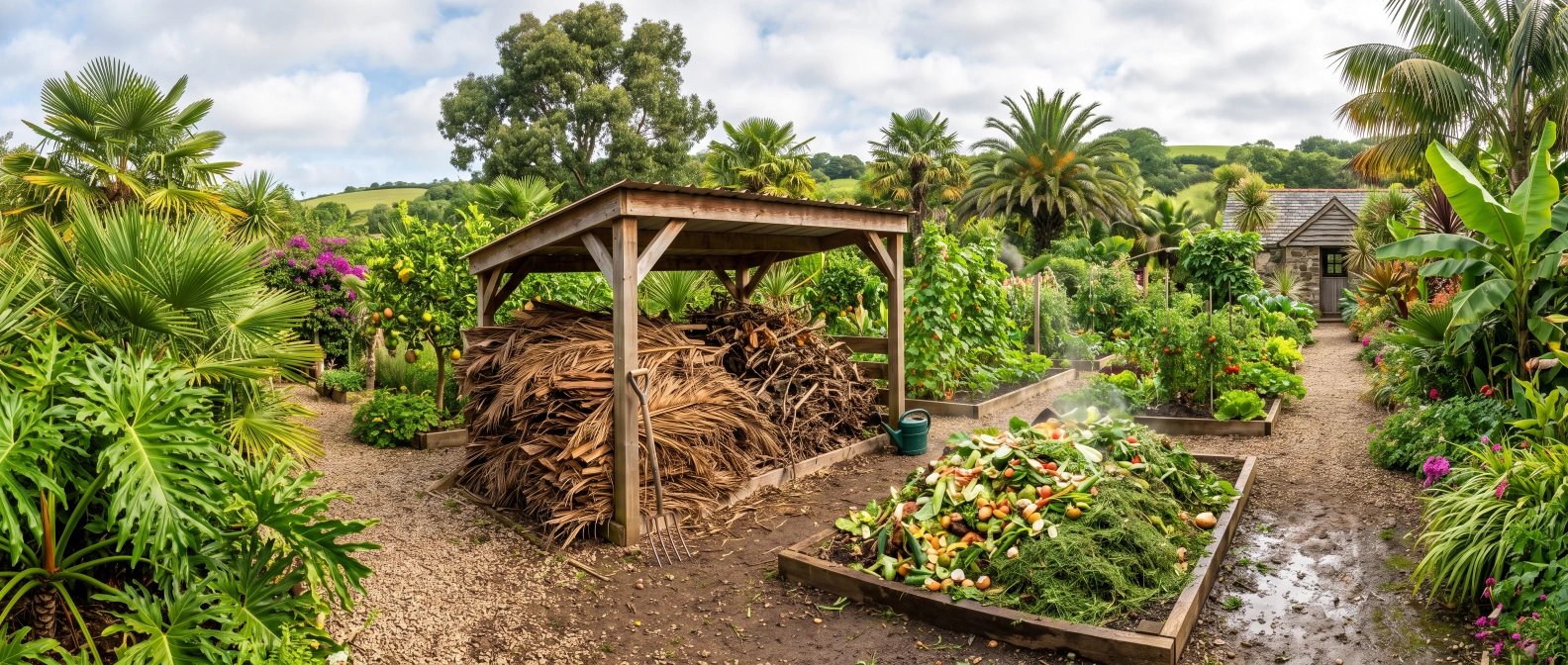
Near-constant plant growth means nitrogen-rich green material is generally abundant here: fresh kitchen scraps, fresh-cut grass, garden weeds and legume trimmings all pile up with little effort. That half of the ratio is easy, much as it is in most warm, humid climates.
Carbon is the more interesting half, and this is where this zone genuinely differs from a true tropical one. Because rainfall here is episodic rather than constant, some plant material really does get the chance to dry out between rain events, palm fronds left to dry, citrus prunings, dried yard waste. In a true tropical climate, almost nothing stays dry long enough to become proper brown material, the rain simply doesn't stop. Here, it does stop, repeatedly, which makes dry carbon genuinely achievable rather than a chronic scarcity.
That said, achievable isn't the same as effortless. Dry carbon here still requires some deliberate drying and isn't as effortlessly abundant as in a genuinely dry climate. The practical task is taking advantage of the dry stretches when they arrive, not assuming carbon will simply turn up on its own the way greens do.
Carbon vs Nitrogen at a Glance
A representative spread of materials genuinely available in a subtropical climate, from the most carbon-heavy to the most nitrogen-heavy. The full input list, with practical notes on using each one, is in the next chapter.
| Material | Type | Approx C:N Ratio | Notes |
|---|---|---|---|
| Cardboard (plain, kept dry) | C | ~400:1 | Shred first; keep out of rain until use |
| Straw (where available) | C | ~75-100:1 | Good bulk carbon and structure; keep dry and covered |
| Dried palm fronds | C | ~80-100:1 | Shred first; genuinely tough even once dry (see Chapter 6) |
| Citrus prunings (dried, shredded) | C | ~50-60:1 | Woody; dry fully and shred before use |
| Dried yard waste / leaves | C | ~40-60:1 | Genuinely achievable here between rain events; stockpile when dry |
| Manure (where available) | N | ~15-20:1 | Well-rotted before use; strong, useful nitrogen source |
| Legume trimmings | N | ~15:1 | Fast-growing nitrogen source (see Chapter 12) |
| Fresh kitchen scraps | N | ~15:1 | Reliably plentiful year-round in this climate |
| Fresh-cut grass | N | ~15-20:1 | Near-constant growth; use before it mats down |
| Fresh garden weeds | N | ~15-20:1 | Pull before seed set; near-constant supply |
Ratios are approximate -- real material varies with freshness, moisture content and exact species. Treat them as a guide to relative balance, not a figure to measure precisely.
Working By Volume, Not Weight
You don't need to weigh anything to get this right in practice. Dry carbon material is typically bulkier and lighter than fresh green material, so working by volume naturally lands close to the target ratio: roughly two buckets or barrowloads of dry carbon (dried palm fronds, citrus prunings, dried yard waste, cardboard) to every one bucket of fresh greens (kitchen scraps, grass clippings, weeds).
Because dry carbon here requires some deliberate effort to produce, letting material dry during the gaps between rain events (see Chapter 11), rather than being either constantly abundant as in a tropical climate or constantly scarce as in an arid one, the practical task is taking advantage of dry stretches to actively dry and stockpile carbon material when the weather allows, rather than assuming it will always be on hand.
Troubleshooting: The Slimy Heap After a Wet Spell
The most common failure mode here is building a heap heavy on fresh greens right after a wet spell without enough dried carbon saved up from the last dry stretch, which turns slimy fast in the heat. It's an easy trap because greens accumulate on their own while a fresh flush of growth follows every downpour, but carbon only exists if it was actually dried and set aside earlier.
The fix is keeping a standing stockpile of dried material topped up whenever conditions allow, not just when building a new heap. Treat drying and stockpiling carbon as an ongoing task through every dry stretch, so there's always a reserve on hand the next time a wet spell delivers a flush of fresh greens.
Frequently Asked Questions
What's the ideal carbon-to-nitrogen ratio in a subtropical climate?
The target is the same everywhere, roughly 25-30 parts carbon to 1 part nitrogen by weight. What's different here is that both halves of that ratio are genuinely achievable, unlike a true tropical climate where carbon is chronically scarce. Nitrogen-rich green material is abundant thanks to near-constant plant growth, and because rainfall here is episodic rather than constant, plant material does get real chances to dry out between rain events, so dry carbon is achievable too, though it still takes some deliberate effort.
Why does my heap keep turning slimy and smelly?
The most common cause here is building a heap heavy on fresh greens right after a wet spell without enough dried carbon saved up from the last dry stretch, which turns slimy fast in the heat. It's an easy trap in this climate because greens are always abundant, while dry carbon only exists if it was deliberately dried and stockpiled during an earlier dry spell. The fix is keeping a standing stockpile of dried material topped up whenever conditions allow, not just when building a new heap.
Is dry carbon as hard to find here as in a true tropical climate?
No, and this is a genuine, meaningful difference. In a true tropical climate almost nothing stays dry long enough to become proper brown material, since it rains too constantly. Here, rainfall is episodic rather than constant, so material like palm fronds, citrus prunings and yard waste genuinely does get the chance to dry out in the gaps between downpours. It still requires some deliberate drying and isn't as effortlessly abundant as in a genuinely dry climate, but it's a realistic, achievable resource rather than a chronic scarcity.
Do I need to weigh my compost inputs to get the ratio right?
No -- working by volume rather than weight is accurate enough in practice, because dry carbon material is typically bulkier and lighter than fresh green material. The rule of thumb is roughly two buckets or barrowloads of dry carbon to every one bucket of fresh greens. In this climate the practical task is taking advantage of dry stretches to actively dry and stockpile carbon material when the weather allows, rather than assuming it will always be on hand.