
Like Mediterranean, this chapter is kept here rather than swapped for something else, because it genuinely fits how most humid subtropical regions behave across a year. The classic problem it solves, fresh material needing somewhere to go while an older batch needs to be left undisturbed to finish, maps onto this climate's real, if considerably gentler, wetter-summer, drier-winter rhythm.
The Problem It Solves
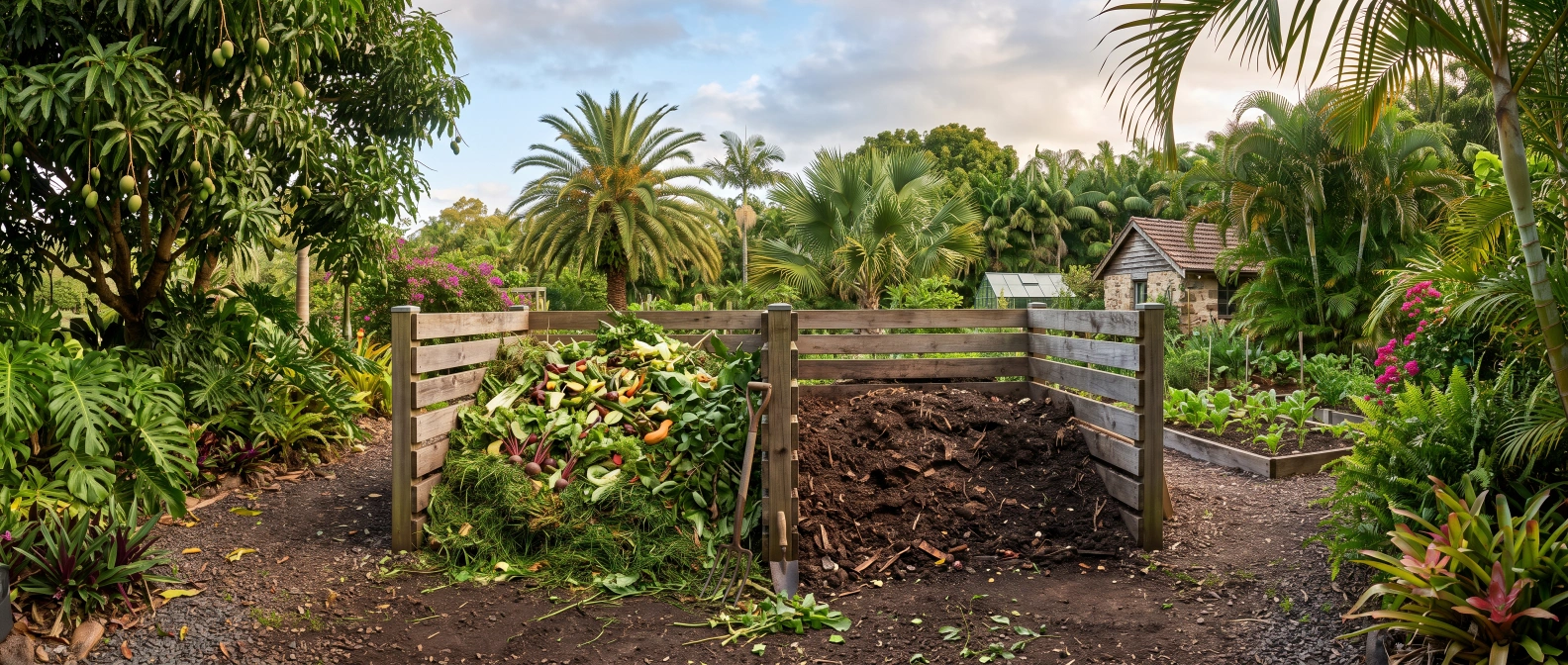
Any active heap eventually needs to stop receiving fresh material and simply be left to finish maturing, but fresh material rarely stops arriving on that same schedule. A single-bin system forces an uncomfortable choice: keep disturbing a heap that's trying to finish, or stockpile fresh material with nowhere to put it while waiting.
Two adjoining bays solve this cleanly. One chamber is actively fed while the other rests undisturbed, and the two swap roles once a cycle completes. It's the same simple idea used across most of this guide's climate zones, but it only becomes genuinely well-matched to a place when the timing of "actively fed" and "resting" lines up with a real seasonal pattern, which, gently, it does here.
Why the Timing Fits, and Why It's More Flexible Here
Most humid subtropical regions genuinely have a wetter summer, when fresh green material, prunings and kitchen scraps pile up fastest, and a milder, generally drier winter, a season better suited to a batch sitting undisturbed and finishing. That's a real rhythm, and it's exactly why this chapter is kept rather than swapped for a different topic the way it is in some other zones in this guide.
It's worth being honest, though: the seasonal swing here is much gentler than Mediterranean's genuine wet/dry split. Decomposition runs fast here nearly year-round thanks to the heat, which means either chamber can make real progress in either season, winter here rarely stalls a heap the way a true cold season would elsewhere. That's not a weakness in the fit, it actually makes the two-chamber system more flexible and forgiving in this climate than in one with a harder seasonal boundary. If a chamber needs to keep receiving material a little longer into what should be its resting season, or a resting chamber needs an early restart, this climate's fast, near-continuous decomposition absorbs that flexibility far more easily than a colder or more sharply seasonal one would.
So: a genuine fit, worth building around, just a gentler and more forgiving one than in a climate with a harder wet/dry line.
Practical Construction
- Two equal-sized bays, side by side, built from timber, block or whatever is most readily available locally.
- The same dual drainage and moisture-retention design covered in Chapter 2 applies to both bays, since each one spends part of the year as the actively fed chamber and needs to handle both a heavy downpour and a dry stretch equally well.
- A shared or removable divider between bays keeps material from mixing while allowing turning access on both sides.
- Clear access to both bays, since the active bay will be fed regularly and the resting bay will need occasional checks and eventual harvesting.
The Annual Cycle in Practice
Roughly: Chamber A fills through the wetter, generally warmer part of the year, when fresh green material is abundant and decomposition runs fast. As the milder, generally drier winter stretch arrives, Chamber A stops receiving fresh material and rests, finishing while Chamber B takes over active feeding.
By the time the wetter season returns, Chamber A is ready to harvest and refill, while Chamber B switches to resting. Each chamber runs on roughly a full calendar cycle, similar in outline to the other zones that keep this method, but with more flexibility here, since so much of the year stays workably warm that either chamber can genuinely make progress out of its usual turn if needed.
Frequently Asked Questions
Why does the two-chamber system suit a subtropical climate?
Because it solves a problem this climate genuinely has: continuous fresh input needing somewhere to go while an earlier batch needs undisturbed time to finish. Most humid subtropical regions do get a real, if gentler than Mediterranean's, seasonal swing, a wetter summer when fresh material is abundant and decomposition runs fast, and a milder, drier winter better suited to a batch resting and finishing undisturbed. One chamber can feed hard through the wetter months while the other rests through the drier ones.
Is the seasonal fit here as strong as in a true wet/dry climate like Mediterranean?
Honestly, no, and it's worth being upfront about that. The seasonal swing here is much gentler than Mediterranean's genuine wet/dry split, since decomposition runs fast here nearly year-round thanks to the heat, meaning either chamber can make real progress in either season. That actually makes the two-chamber system more flexible and forgiving here than in a climate with a harder seasonal boundary, the rhythm is a genuine fit, just a gentler and more forgiving one.
Do I need to build both chambers to the same size?
Yes. Two equal-sized bays, built side by side, keep the system genuinely interchangeable, whichever bay is currently resting will become the next actively fed one, and an uneven pair makes that handover awkward. Give both bays the same drainage and shade consideration covered in Chapter 2, since each one spends part of the year as the actively fed chamber and part of the year finishing.