
Biochar is stable, porous charcoal made specifically to go into soil rather than be burned for heat, and unlike compost it doesn't break down further once it's there, it's a genuinely permanent structural addition. That permanence matters a great deal in this zone, where much of the ground itself is working against water and nutrient retention from the start.
Why Biochar Matters in This Climate
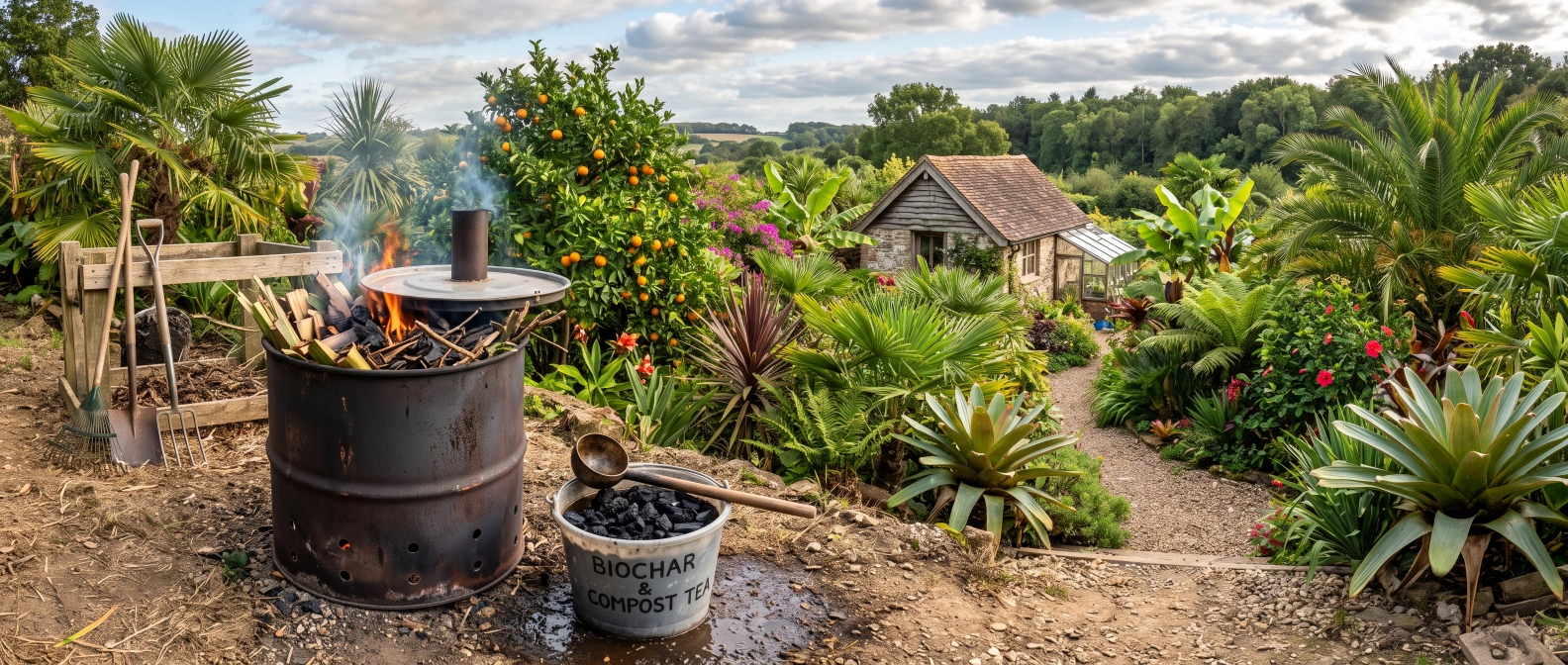
Much of this zone sits on sandy, free-draining coastal plain soil, a genuine and specific soil character common across Florida, the Gulf Coast and similar subtropical coastal regions. That kind of soil drains fast, which sounds like an advantage given this zone's occasional heavy downpours, but it also means water and nutrients pass through it and out of reach of plant roots before they can be used. Biochar's porous structure directly addresses this: its huge internal surface area holds onto both moisture, helping bridge the dry spells covered in Chapter 11, and nutrients that would otherwise leach straight through.
Making Biochar
Biochar is produced through pyrolysis, burning woody material with restricted oxygen rather than a full, open flame, then quenching it with water once it's charred through. The restricted-oxygen burn is what turns the wood into stable, porous charcoal instead of simply burning it to ash, and the water quench stops the burn at the right point and locks in that porous structure.
Charging Biochar Before Use
Raw biochar should never be applied to soil unamended. Straight off the burn, its huge pore structure is empty, and it will actually draw nutrients out of the surrounding soil to fill itself, robbing plants of nutrients rather than supplying them. It needs to be charged first, soaked in compost tea or urine-diluted water, or mixed thoroughly into finished compost, so its pores are already full of nutrients and microbial life before it goes anywhere near a bed.
Feedstock in a Subtropical Garden
Palm fronds and citrus prunings (see Chapter 6) make particularly practical biochar feedstock. Both are tough, fibrous material that's genuinely slow to break down in an ordinary compost heap even when shredded, so material that would otherwise sit resisting decomposition for a very long stretch is often better used as biochar feedstock instead, converting a slow composting problem into a fast, permanent soil amendment. This fits directly into the long-term soil-building approach covered in Chapter 19.
Frequently Asked Questions
Why does biochar matter specifically in this climate zone?
Because much of this zone sits on sandy, free-draining coastal plain soil, a genuine and specific soil character common across Florida, the Gulf Coast and similar subtropical coastal regions, and that kind of soil holds water and nutrients poorly on its own. Biochar's porous structure directly helps it retain both water, bridging the dry spells between rain events, and nutrients that would otherwise leach straight through.
Can I just dig raw biochar straight into the soil?
No, raw biochar should never be applied unamended. Fresh from the burn, it can actually rob soil of nutrients as it draws them in to fill its pore structure. It needs to be charged first, soaked in compost tea or urine-diluted water, or mixed into finished compost, before it goes anywhere near soil.
What's good biochar feedstock in a subtropical garden?
Palm fronds and citrus prunings work well. They're particularly tough, fibrous material that's genuinely slow to break down in an ordinary compost heap, so material that would otherwise sit resisting decomposition for a long stretch is often more practically used as biochar feedstock instead.