
This closing chapter steps back from any single season to the bigger picture: what composting, done consistently, can actually do to boreal soil over years rather than months. It's the same question the other eighteen chapters have been building toward all along.
Why Boreal Soil Starts Poor
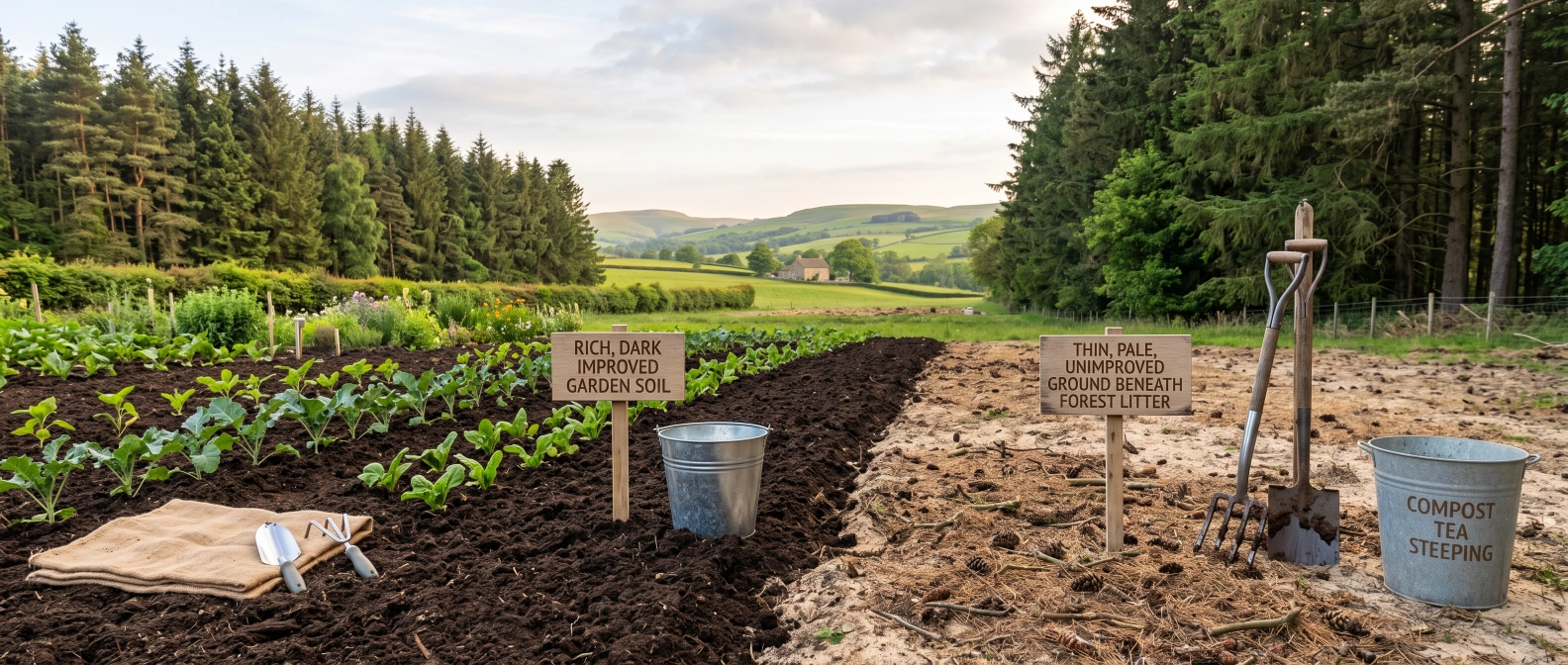
Left to itself, boreal soil is naturally acidic, thin and nutrient-poor. It formed under coniferous forest litter that breaks down slowly in acidic, cool conditions, and it formed over a short growing season each year, the same short season a gardener here has to work with today. That's not a flaw to fight against so much as the honest starting point, and it's exactly why consistent composting, patiently built one short season at a time, is one of the few practical ways to meaningfully change that starting point over years rather than accepting it as fixed.
Diversity of Inputs Matters Here Too
No single input carries the whole job. Wood ash used in moderation corrects some of that natural acidity (see Chapter 6), biochar adds a permanent structural improvement that keeps working for decades once it's in the ground (see Chapter 9), chop-and-drop green manures feed soil biology directly where they fall (see Chapter 12), and humanure and ordinary kitchen scraps round out the range of organic matter feeding both soil structure and the organisms living in it. Together, and only together, these build soil that's more than the sum of any one input applied on its own.
The Terra Preta Parallel, Honestly Adapted
The historical example of terra preta, poor tropical soil transformed into something remarkably rich and stable through generations of charcoal and organic matter addition, is a genuinely useful model here too: the same basic principle, sustained addition of stable organic matter and charcoal, applies to boreal soil just as it did there. But it's worth being honest about the difference: that tradition developed in a warm climate with a far longer working season each year than a boreal climate gets. Results here won't come as quickly. They'll accumulate more slowly and demand real patience across many short seasons rather than the handful of long ones the original tradition had to work with, but the underlying transformation is the same one to aim for.
A Closing Principle: Patience Across Years
Judge this work in years, not seasons. Each short season's compost, however modest the quantity given how little time there is to make it, still compounds year on year with consistent effort. Acidic, thin boreal soil genuinely can become richer and more productive over five, ten, or twenty years of this kind of patient, insulated, well-timed composting, even though no single year will show the dramatic results a longer-season climate might produce in the same time. That's the real payoff of everything in this guide: not a quick fix, but steady, compounding improvement built one short, hard-won season at a time.
Frequently Asked Questions
Why is boreal soil naturally so poor to begin with?
Because it formed slowly, under coniferous forest litter that decomposes very slowly in acidic conditions, and over a short growing season each year rather than a long one. The result is soil that's typically thin, acidic and nutrient-poor compared to soils that formed under longer, warmer conditions, and it's the same short season a gardener here has to work with when trying to improve it.
Does the terra preta idea of permanently enriched soil actually apply in this climate?
The same underlying principle applies, long-term addition of charcoal and organic matter transforming poor soil into something far richer, but honestly, the tradition itself developed in a warm climate with a much longer working season each year than a boreal climate gets. Results here will accumulate more slowly, and take real patience across many short seasons rather than a handful of long ones, but the direction of change is the same.
Will I see dramatic results from composting here in a single year?
Usually not, and it helps to expect that honestly from the start. Each short season's compost, however modest the quantity given how little time there is to make it, still compounds over years of consistent effort. Acidic, thin boreal soil genuinely can become richer and more productive over five, ten or twenty years of patient, insulated, well-timed composting, even though no single year will show the dramatic change a longer-season climate might produce.