
Thin, young, rocky mountain soils benefit enormously from any addition that genuinely improves structure and nutrient retention, and biochar, stable, porous charcoal made by burning woody material with restricted oxygen, is one of the most lasting inputs available. The honest complication, first raised in Chapter 1, is that the thin air at altitude makes producing good biochar genuinely harder than at sea level.
Making Biochar: Pyrolysis and Quenching
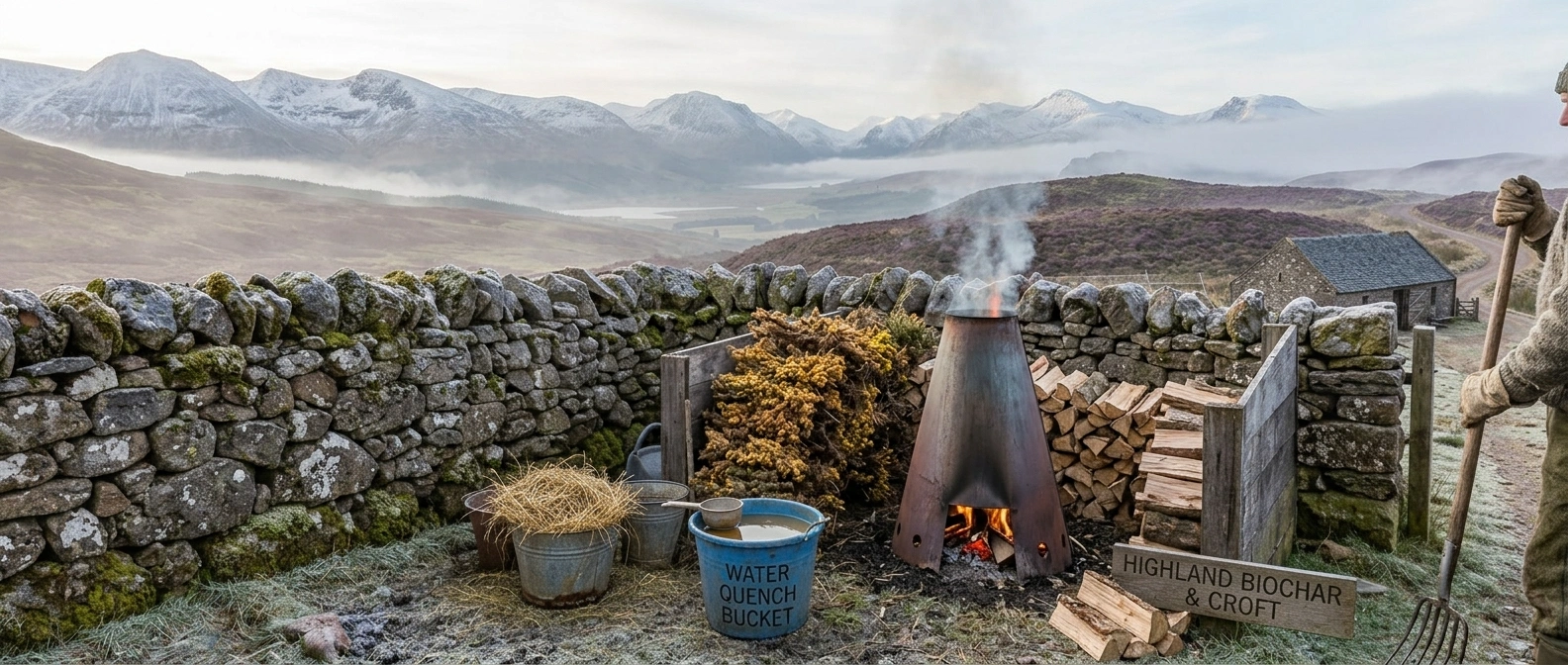
Biochar is produced by pyrolysis, burning woody material in a controlled, oxygen-restricted environment so it chars rather than fully combusts to ash, then quenching it with water once the burn is done to lock in its stable, porous structure. The basic method is the same everywhere, but the details of executing it well matter more here than in most climates in this guide.
Lower atmospheric pressure at altitude means less oxygen is available in a given volume of air, which makes sustaining the hot, controlled burn biochar production depends on genuinely harder than at sea level. Compensate with a burn design that maximises airflow and draft, a cone kiln or trench with good ventilation works better here than a sealed or shallow arrangement. Be patient, and expect the process to demand more attention, and possibly more time, than the same technique would take at low elevation. Use well-dried material without exception, since any extra moisture in the wood makes an already harder burn even more difficult to sustain.
Charging Biochar Before Use
Raw biochar should never be applied straight to soil. Its highly porous structure can actually rob soil of nutrients initially, absorbing them before plants have the chance to use them. It needs to be "charged" first, soaked in compost tea or urine-diluted water, or mixed directly into finished compost, so it enters the soil already carrying nutrients rather than pulling them away.
Source Material
Whatever woody or scrub material is available locally can be used, though it's honest to say vegetation, and therefore woody material, is often genuinely limited at real altitude, echoing the material scarcity theme running through Chapter 5. Even a modest amount, made carefully and used deliberately rather than applied casually, can meaningfully help thin mountain soil retain nutrients and water, and its permanence means that effort compounds over the years of patient soil-building covered in Chapter 19.
Frequently Asked Questions
Why does biochar matter so much for mountain soils specifically?
Because thin, young, rocky mountain soils start from a genuinely low baseline of organic matter and structure, having had far less time and vegetation cover to build it than soils at lower elevation. Biochar's stable, porous structure improves both water and nutrient retention in exactly the way this kind of thin ground needs most, and because it's permanent rather than something that breaks down and needs replacing, even a modest amount used deliberately makes a lasting difference.
Why is making biochar harder at altitude?
Lower atmospheric pressure at altitude means less oxygen available in a given volume of air, and biochar production relies on sustaining a genuinely hot, controlled burn with restricted airflow, which is harder to achieve and hold when the air itself carries less oxygen to begin with. Expect the process to demand more attention and possibly more time than the same technique would take at sea level, and design the burn with especially good airflow and draft to compensate.
Can raw biochar be added straight to soil?
No, raw biochar should never be applied unamended, since its highly porous structure can actually rob soil of nutrients initially by absorbing them before plants get the chance. It needs to be charged first, either by soaking it in compost tea or urine-diluted water, or by mixing it into finished compost, before it's ever added to soil.