
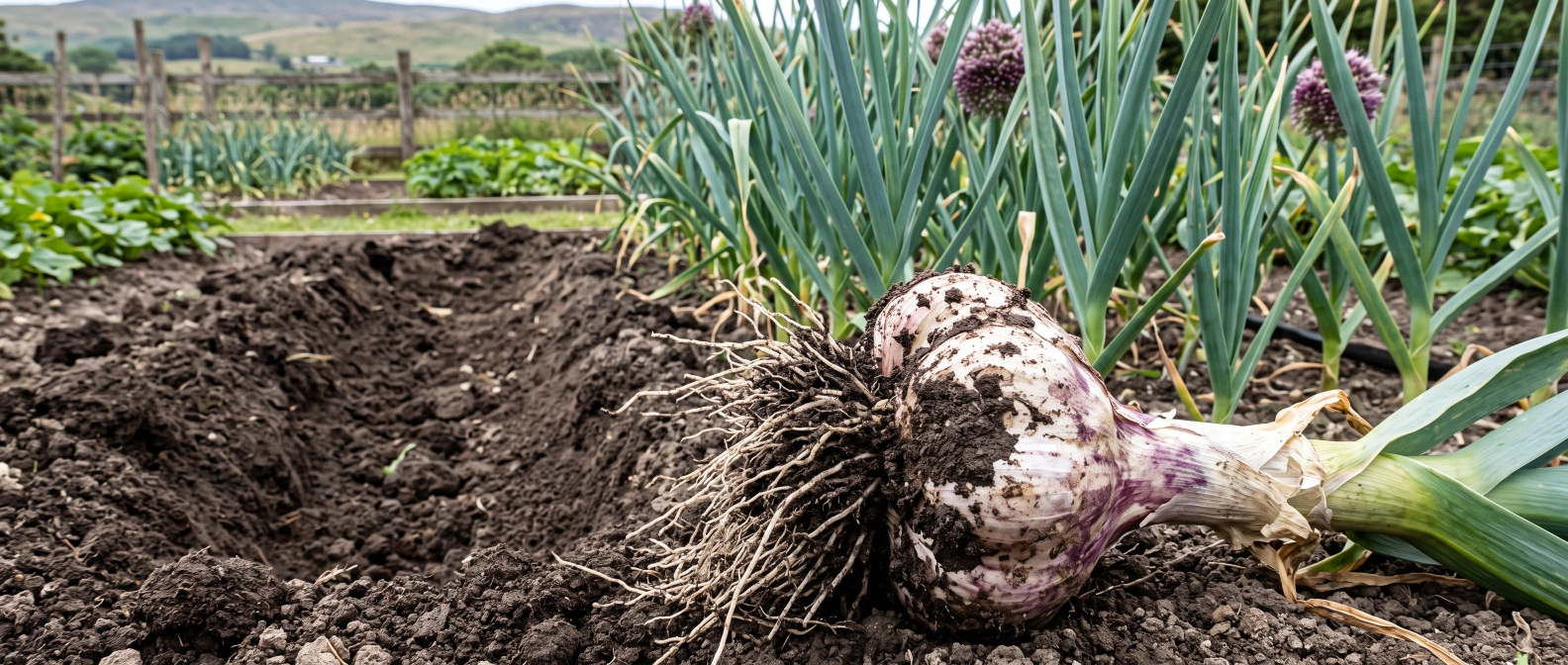
Milder than true garlic with genuinely large bulbs, per the crop database's own description, and grown the same way -- planted as cloves in autumn. But botanically it's not garlic at all: elephant garlic is the same species as leek, a real allium plot-twist that changes which of this hub's crops it can cross-pollinate with.
Water need
Wants more consistent moisture than true garlic to grow its genuinely much larger bulbs and cloves -- closer to leek's needs than garlic's.
Calories at a glance
960 kcal/kg -- a genuinely solid contributor, well ahead of onion or leek, though behind true garlic's exceptional density (scale is log-based across all 55 core crops in the calculator).
Temperature Range by Month
Month on the bottom, temperature up the side. The pale green background is what the plant can survive at all -- fatal above or below it, labelled directly on the chart where that applies to your zone. The coral band is its ideal range, and only fades in during the months this zone would actually have the crop in the ground -- reusing the exact same sowing/harvesting data as the calendar further down the page. The blue line is real monthly climate data (not a modelled estimate) for a representative rural/agricultural location in this zone -- a small farming town or agricultural research station rather than a major city, to avoid the warmer bias city weather stations have. For the actual verdict on how well this crop does in your zone, see the badge at the top of the page -- that's based on the site's own researched yield figures, not this chart.
Quick Start: Planting to Storage
- Plant cloves in autumn. Split bulbs into individual cloves and plant the largest ones in autumn -- treat it as garlic for growing purposes, per the crop database's own instruction.
- Give it real room. Space cloves generously -- elephant garlic bulbs and cloves grow noticeably larger than true garlic, and need the extra room to reach full size.
- Remove flower stalks if they appear. Cut off any flower stalk that forms, the same as with hardneck true garlic -- this redirects energy into bulb size rather than an unreliable flower head.
- Harvest once lower leaves brown. Lift bulbs once the lower third to half of the leaves have died back and browned -- the same ripeness marker as true garlic.
- Cure thoroughly before long-term storage. Dry bulbs somewhere warm, dry and airy for two to four weeks before storing -- proper curing genuinely extends how long the bulbs keep.
Planting & Harvesting Calendar
Pick your zone under "Temperature Range by Month" above and this updates too. This calendar is nearly identical in shape to true garlic's -- autumn planting, summer harvest the following year -- reflecting how closely the two are grown, even though they're different species.
Calories & Yield
Tropical gives the best yield here, and its per-plant kg figures run genuinely higher than true garlic's, reflecting elephant garlic's much larger bulb size.
| Climate Zone | Yield per plant | Calories per plant | Viability |
|---|---|---|---|
| Tropical / Humid | 9.0 kg | 8,640 kcal | Viable -- best yield |
| Subtropical | 8.0 kg | 7,680 kcal | Viable |
| Mediterranean | 8.0 kg | 7,680 kcal | Viable |
| Temperate Maritime | 6.0 kg | 5,760 kcal | Viable |
| Temperate Continental | 7.0 kg | 6,720 kcal | Viable |
| Cool / Boreal | 2.1 kg | 2,016 kcal | Challenging (60% yield) |
| Arid / Semi-Arid | 3.0 kg | 2,880 kcal | Challenging (60% yield) |
| Highland / Alpine | 2.1 kg | 2,016 kcal | Challenging (60% yield) |
Figures per plant sown (kg per bulb harvested), from the site's own crop database. Boreal, Arid and Alpine already reflect the 60% penalty applied to challenging zones.
A note on varieties: elephant garlic (actually a leek relative, not true garlic) is mostly sold and grown as a single undifferentiated type -- real named-cultivar diversity is genuinely thin.
Seed Saving -- Quick Guide
Elephant garlic rarely flowers reliably in cultivation, since it's normally grown from cloves -- but if it does flower, it's the same species as leek (Allium ampeloprasum) and will cross with it. No cross-risk with true garlic, a different species.
SERVINGS, NOT DAILY CALORIES This works out plate-sized servings of elephant garlic from your planting bulbs during its fresh harvest window only, not your group's full daily calorie needs. For that, use the main calculator.
Estimated for your selected zone above, using this site's own germination, loss and yield figures for elephant garlic -- a helping is roughly what you'd put on a plate as part of a meal with other veg. Treat it as a planning estimate, not a promise.
Storage & Preservation
Properly cured bulbs keep well, though generally somewhat shorter than true garlic's best storage life -- 4-6 months is a realistic expectation kept cool, dry and well-ventilated.
Its milder flavour also makes it a genuinely good candidate for roasting whole and preserving in oil, alongside the standard cured-bulb storage route.
Growing Elephant Garlic Without Bought Inputs
Genuinely low-maintenance once planted, much like true garlic -- its main real requirement is the extra space its larger bulbs and cloves need.
Rust and white rot are the main disease risks, the same pressures this hub's other alliums face.
Good rotation and generous spacing for airflow are simple, genuinely effective input-free measures.
Frequently Asked Questions
Is elephant garlic actually a type of garlic?
No -- genuinely not, despite the name and despite the crop database's own instruction to treat it as garlic for growing purposes. Elephant garlic is Allium ampeloprasum, the same species as leek, not Allium sativum (true garlic). It's really a leek relative that happens to form a large, mild, garlic-like bulb.
Does elephant garlic cross-pollinate with leek?
Genuinely, yes -- since they're the same species, Allium ampeloprasum. In practice the risk is lower than that alone suggests, because elephant garlic (like true garlic) is usually grown from cloves or bulbils and doesn't reliably flower in cultivation. But if either does flower, treat them as real cross-partners, not a background worry.
Does elephant garlic cross-pollinate with true garlic?
No -- despite the shared name and near-identical growing method, true garlic is a different species, Allium sativum. Different species don't cross under ordinary garden conditions, so elephant garlic and true garlic are genuinely safe to grow side by side.