
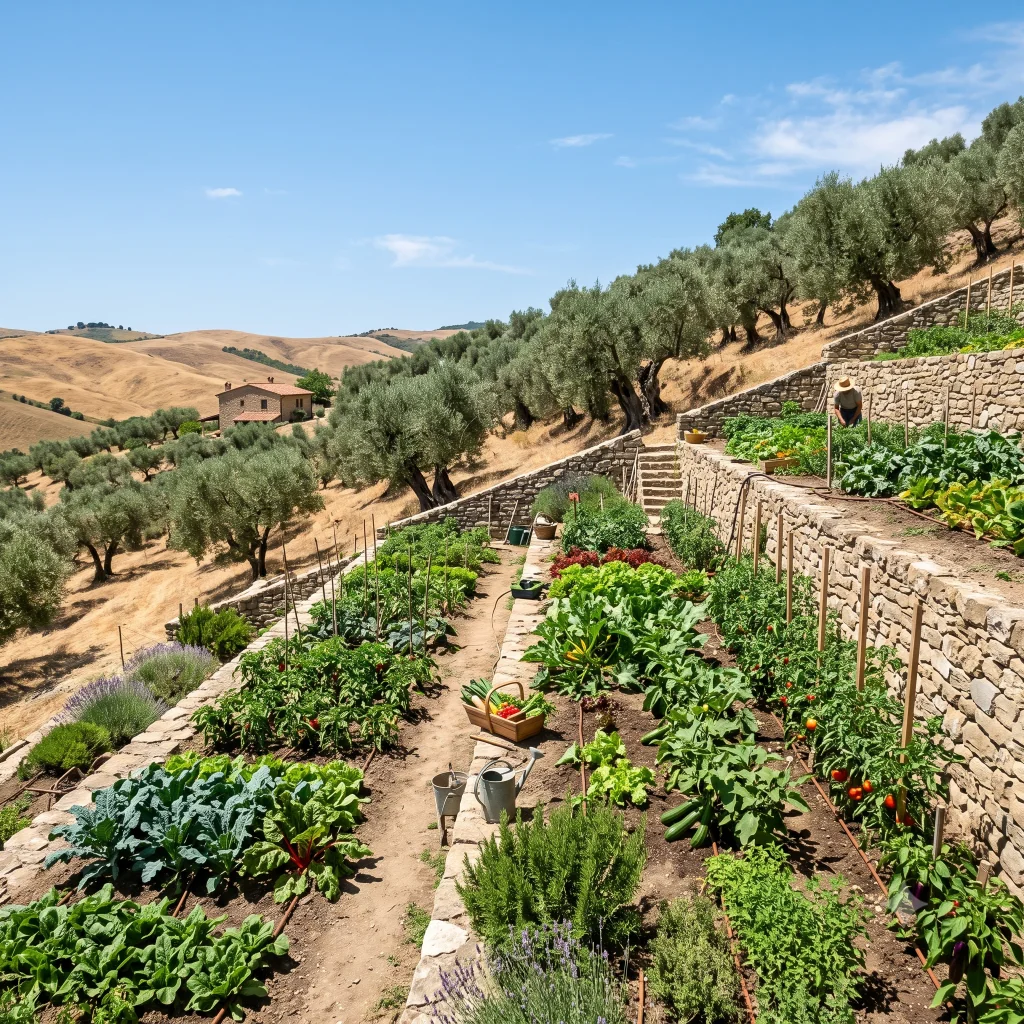
Best bets: tomato, pepper, aubergine, garlic, chickpea and squash. A Mediterranean zone (Spain, Italy, Greece, California, S. Australia) is widely considered one of the best growing climates going -- a long 8-10 month season with hot, dry summers and mild, wet winters. The pattern rewards crops that love summer heat and can be planned around the dry season, rather than fighting it.
Crops Worth Prioritising
- Tomato -- a genuinely classic Mediterranean crop, thriving on long, hot, dry summers.
- Pepper -- needs the sustained warmth this zone provides in abundance.
- Aubergine -- another heat-loving crop that matches this zone's summer pattern closely.
- Garlic -- planted in autumn to take advantage of the mild, wet winter before summer harvest.
- Chickpea -- genuinely drought-tolerant, well suited to the dry summer stretch.
- Squash -- makes full use of the long season to mature properly, both summer and winter types.
Frequently Asked Questions
What are the best crops to grow in a Mediterranean climate?
Tomato, pepper, aubergine, garlic, chickpea and squash are all classic, genuinely well-suited crops for a Mediterranean climate -- these thrive on the long, dry, hot summer that defines the zone and cope well with the mild, wetter winter that follows, which is exactly the reverse growing pattern of most temperate zones.
Why is Mediterranean often considered one of the best zones for growing food?
Because it combines a long 8-10 month growing season with generally favourable, predictable weather patterns -- hot dry summers and mild wet winters are demanding in their own way, but they're consistent and well understood, which makes yields more reliable than in zones with a shorter season or more erratic weather.
What's the main challenge in a Mediterranean climate?
Managing water through the dry summer is the main challenge -- the defining feature of this climate is a long stretch with little to no rain during the hottest part of the year, so irrigation planning and drought-tolerant crop choices matter more here than pure season length or temperature.