
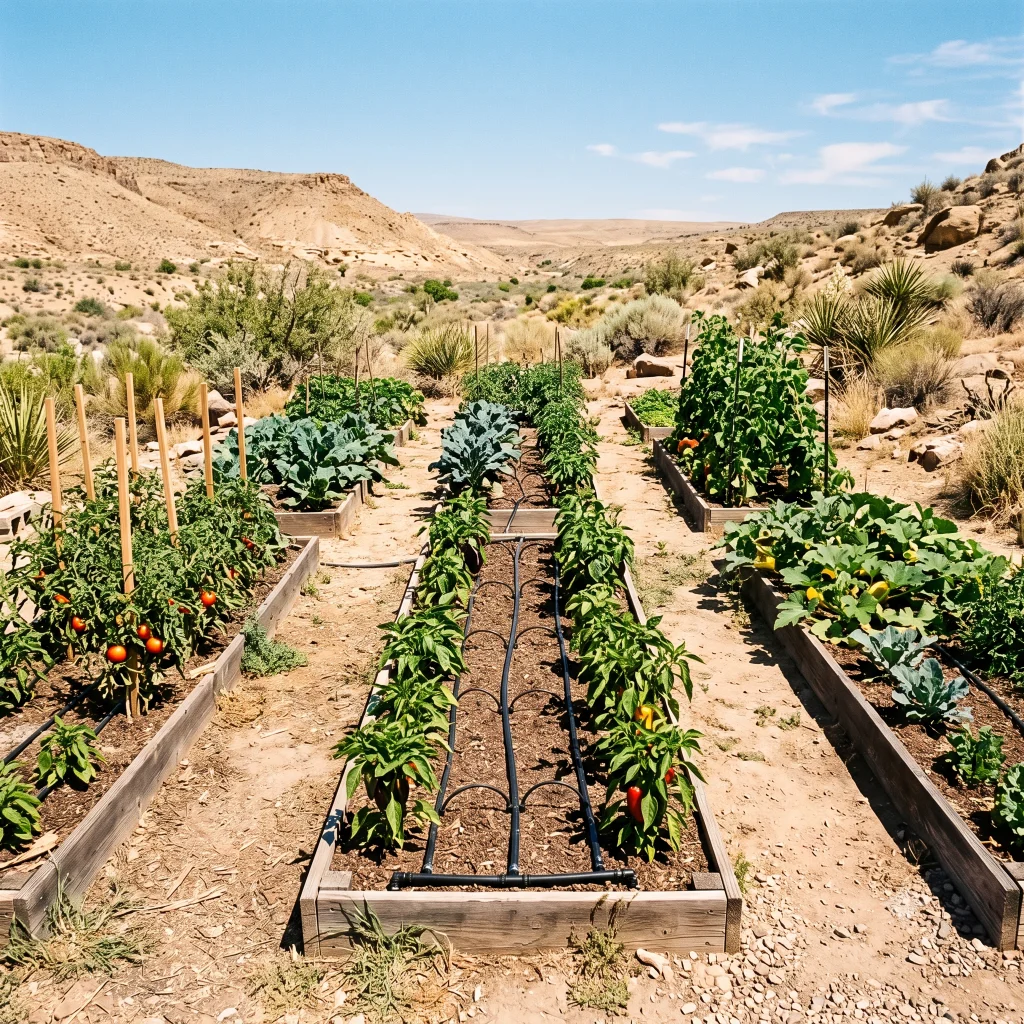
Best bets: tepary bean, moth bean, pearl millet, amaranth, chickpea and onion. An arid/semi-arid zone (Middle East, N. Africa, Australian interior, SW USA) has genuinely variable conditions, but one constant: water, not heat or season length, is the primary constraint. These crops are all genuinely drought-adapted -- several originate from arid regions specifically and have been selected over generations for minimal water needs.
Crops Worth Prioritising
- Tepary Bean -- a genuinely desert-adapted heirloom, native to the arid US Southwest and Mexico.
- Moth Bean -- another true arid-region legume, thriving where conventional beans would struggle.
- Pearl Millet -- a classic drought-tolerant grain crop, well suited to limited-water conditions.
- Amaranth -- copes with limited water considerably better than most conventional grain alternatives.
- Chickpea -- genuinely drought-tolerant, a reliable protein source under constrained water.
- Onion -- copes reasonably well with limited water once established, and stores well afterward.
Frequently Asked Questions
What are the best crops to grow in an arid or drought-prone climate?
Tepary bean, moth bean, pearl millet, amaranth, chickpea and onion are all genuinely drought-adapted crops, several originating from arid regions specifically and bred over generations for minimal water needs -- these consistently outperform crops adapted to wetter climates when water is the primary constraint, which it is in every arid or semi-arid zone.
Why is water described as the primary constraint in an arid climate, rather than heat or season length?
Because arid zones can have a perfectly workable growing season and manageable temperatures, but without sufficient water, none of that matters -- water availability, not heat or day length, is what actually determines whether a crop succeeds or fails, which is why crop choice and irrigation planning matter more here than in almost any other zone.
Are drought-tolerant crops lower-yielding than water-hungry alternatives?
Often yes, in absolute terms, when compared under ideal well-watered conditions -- but the comparison that actually matters is yield under real arid-zone water constraints, where drought-adapted crops like tepary bean or pearl millet reliably outperform thirstier crops that would simply fail or produce far less without irrigation they can't realistically get.