
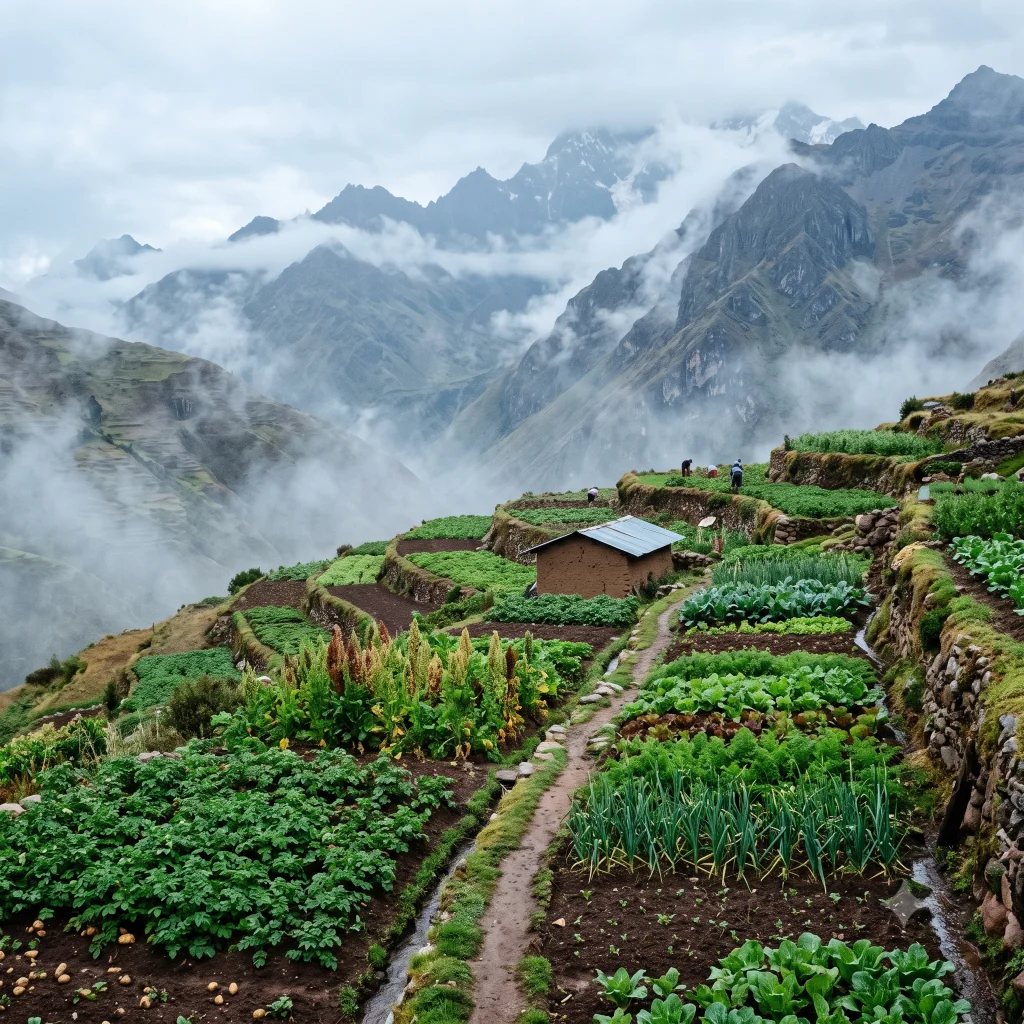
Best bets: potato, quinoa, broad beans, barley, kale and turnip. A highland/alpine zone (Andes, E. Africa highlands, Nepal, Scottish uplands) runs a short 4-6 month season, cool and often wet, at real altitude. Potato and quinoa aren't just tolerant of these conditions -- both were originally domesticated by Andean farmers specifically at high altitude, which makes them a natural fit rather than a compromise choice.
Crops Worth Prioritising
- Potato -- originally domesticated at high altitude in the Andes; a genuine natural fit for alpine conditions.
- Quinoa -- another true Andean highland staple, bred over millennia for exactly this environment.
- Broad Beans -- genuinely hardy and well suited to cool, short-season growing.
- Barley -- one of the few grains that reliably matures within a short alpine season.
- Kale -- frost-hardy and tolerant of the cool, often wet conditions typical of highland zones.
- Turnip -- fast-maturing enough to fit comfortably within the available season.
Frequently Asked Questions
What are the best crops to grow in a highland or alpine climate?
Potato, quinoa, broad beans, barley, kale and turnip are all genuinely well-suited to highland and alpine conditions -- potato and quinoa in particular were originally domesticated at high altitude in the Andes specifically for cool, thin-air growing conditions, which makes them a natural fit rather than a compromise choice.
Why do potato and quinoa do so well at altitude?
Because both crops were originally domesticated by Andean farmers specifically at high altitude, over thousands of years of selection for cool temperatures, intense UV, thin air and short growing seasons -- they're not simply tolerant of alpine conditions, they were shaped by exactly this environment, which is why they remain standout performers in highland zones worldwide.
What makes alpine growing different from a boreal climate, even though both are cold?
Altitude adds factors a boreal (cold but low-elevation) climate doesn't have -- thinner air, more intense UV exposure, and often significant day-to-night temperature swings even within a single growing day, on top of the short 4-6 month season and generally wet, cool conditions typical of highland zones.