
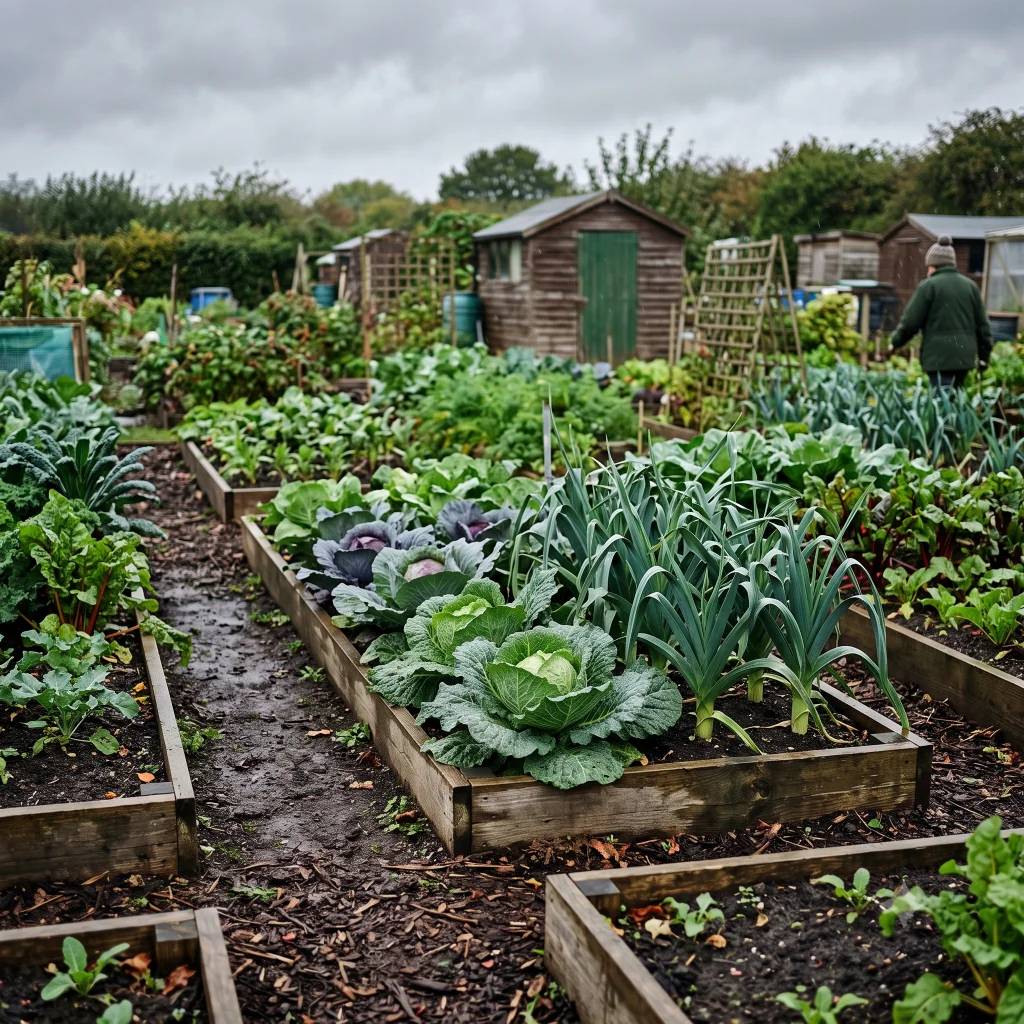
Best bets: potato, carrot, leek, cabbage, broad beans and kale. A temperate maritime zone (UK, Ireland, N. France, NW Germany, Pacific NW USA) offers a 6-8 month growing season that's mild but changeable -- wet, windy, with frost risk roughly October to April. These crops all cope well with that combination, tolerating wind and damp better than more delicate alternatives.
Crops Worth Prioritising
- Potato -- a genuinely reliable calorie staple across a wide range of maritime conditions.
- Carrot -- copes well with mild, damp conditions; Nantes-type varieties are particularly well suited to this zone.
- Leek -- genuinely hardy through a maritime winter, extending the harvest window well into the cold months.
- Cabbage -- both summer and winter types are reliable performers in mild, wet conditions.
- Broad Beans -- autumn-sown hardy varieties overwinter well and crop early the following year.
- Kale -- genuinely frost-hardy, often the last crop standing through a maritime winter.
Frequently Asked Questions
What are the best crops to grow in a temperate maritime climate?
Potato, carrot, leek, cabbage, broad beans and kale are all classic, reliable choices for a temperate maritime climate -- these crops cope well with mild but changeable weather, tolerate wind and wet better than many alternatives, and several (leek, kale, broad beans sown in autumn) genuinely benefit from the mild winters typical of this zone.
Why does wind matter so much in a maritime climate?
Because maritime zones are exposed to persistent wind off the sea in a way inland climates usually aren't, and wind causes real physical damage to tall or delicate crops, dries out soil faster than expected, and can knock pollinators off their usual activity -- windbreaks and choosing naturally sturdier crops both matter more here than in a sheltered inland zone.
Is frost a big risk in a temperate maritime climate?
Frost risk runs roughly October to April, but maritime zones are generally milder than continental ones at the same latitude, since the sea moderates temperature swings -- the real planning challenge is less about severe cold and more about a relatively short 6-8 month growing season squeezed between frost risk periods.