
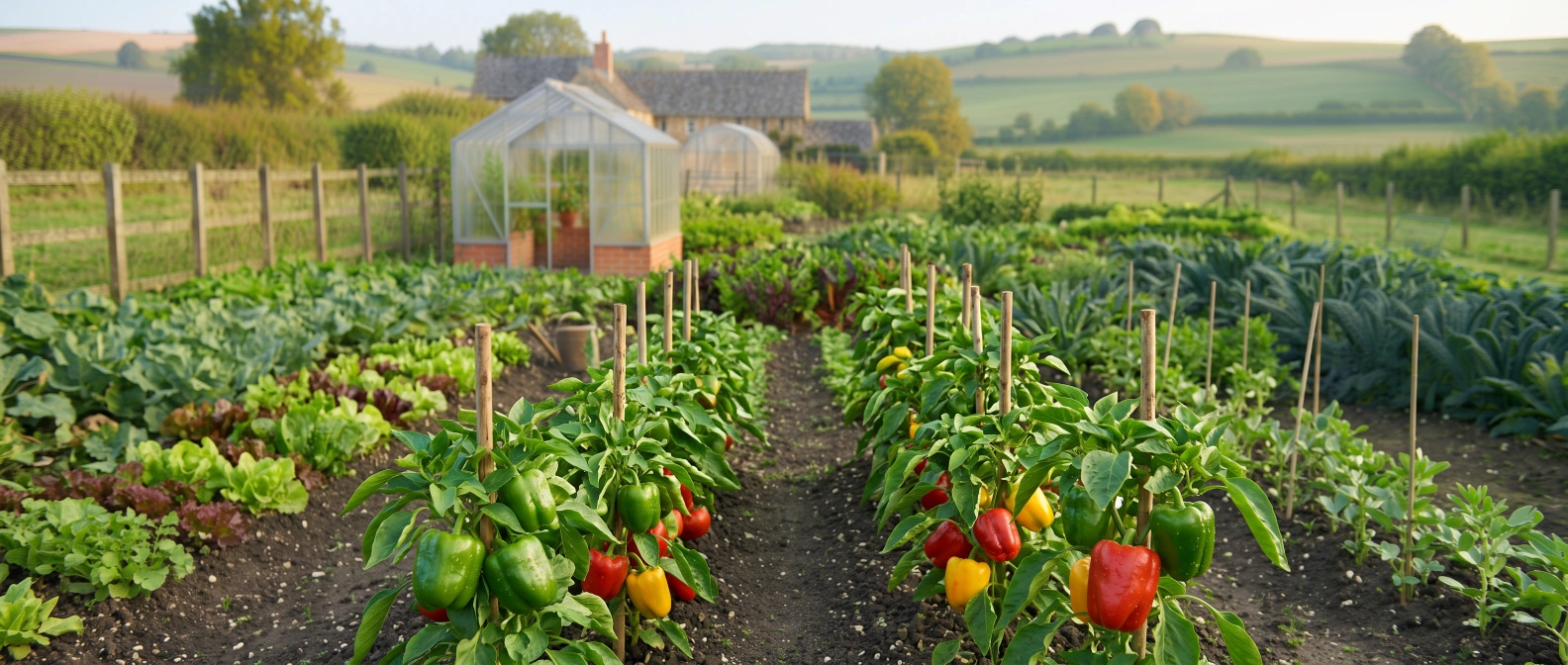
Sweet pepper and chilli are commonly the same species -- a real surprise given how different they taste -- and genuinely cross-pollinate if grown for seed near each other. Pepper's other defining trait is a demand for sustained warmth: the crop database itself marks it suitable outdoors in Mediterranean zones but needing real protection in maritime ones, and it isn't viable at all in this site's coldest zones.
Water need
Consistent moisture supports steady fruit development -- irregular watering checks growth and can cause flower and fruit drop.
Calories at a glance
310 kcal/kg -- ahead of tomato and cucumber, still far below any calorie staple (scale is log-based across all 55 crops in the calculator).
Temperature Range by Month
Month on the bottom, temperature up the side. The pale green background is what the plant can survive at all -- fatal above or below it, labelled directly on the chart where that applies to your zone. The coral band is its ideal range, and only fades in during the months this zone would actually have the crop in the ground -- reusing the exact same sowing/harvesting data as the calendar further down the page. The blue line is real monthly climate data (not a modelled estimate) for a representative rural/agricultural location in this zone -- a small farming town or agricultural research station rather than a major city, to avoid the warmer bias city weather stations have. For the actual verdict on how well this crop does in your zone, see the badge at the top of the page -- that's based on the site's own researched yield figures, not this chart.
Quick Start: Sowing to Harvest
- Start under cover, early. Sow seed under cover in February or March -- pepper needs a genuinely long season, so an early, warm start indoors matters more here than for most crops on this site.
- Plant out only once it's reliably warm. Pepper has essentially no frost tolerance -- wait until night temperatures are consistently above about 15°C before planting out, later than tomato in most zones.
- Grow under cover in maritime and cooler zones. A greenhouse or polytunnel makes a real difference outside Mediterranean-type climates, buying the sustained warmth pepper needs to flower and fruit reliably.
- Keep watering even. Consistent moisture supports steady fruit development -- irregular watering checks growth and can cause flower and fruit drop.
- Harvest green or let ripen to full colour. Peppers can be picked green (immature) or left to ripen to red, yellow or orange for a sweeter flavour and higher vitamin content -- leaving fruit to fully ripen also slows the plant's production of new ones.
Sowing & Harvesting Calendar
Pick your zone under "Temperature Range by Month" above and this updates too. Notice Boreal and Alpine show no window at all -- neither zone offers the sustained warm season pepper needs, even under cover.
Calories & Yield
Pepper is a modest calorie crop at about 310 kcal per kg. Subtropical and Mediterranean zones give the best yields here, and Boreal and Alpine aren't viable at all.
| Climate Zone | Yield per plant | Calories per plant | Viability |
|---|---|---|---|
| Tropical / Humid | 0.5 kg | 155 kcal | Viable |
| Subtropical | 0.8 kg | 248 kcal | Viable -- best yield |
| Mediterranean | 0.8 kg | 248 kcal | Viable -- best yield |
| Temperate Maritime | 0.3 kg | 55.8 kcal | Viable -- challenging, protection needed |
| Temperate Continental | 0.6 kg | 186 kcal | Viable |
| Cool / Boreal | -- | -- | Not viable |
| Arid / Semi-Arid | 0.6 kg | 186 kcal | Viable |
| Highland / Alpine | -- | -- | Not viable |
Figures per plant, from the site's own crop database. Maritime's yield already reflects the 60% penalty the calculator applies where the zone is rated "challenging" rather than fully viable.
Varieties Worth Knowing
Sweet pepper varieties differ in shape, wall thickness and how sweet they get as they ripen. All the varieties below are open-pollinated (OP), meaning seed saved from them breeds true and is worth keeping under this site's seed-saving approach; none are F1 hybrids.
Seed Saving -- Quick Guide
Sweet and hot peppers are mostly the same species (Capsicum annuum) and will cross with each other -- but the hottest habanero-type chillies are usually a different species that doesn't cross with the rest.
SERVINGS, NOT DAILY CALORIES This works out plate-sized servings of pepper from your seed during its fresh harvest window only, not your group's full daily calorie needs. For that, use the main calculator.
Estimated for your selected zone above, using this site's own germination, loss and yield figures for pepper -- a helping is roughly what you'd put on a plate as part of a meal with other veg. Treat it as a planning estimate, not a promise.
Storage & Preservation
Sweet pepper isn't described as a storage crop in the site's own crop data -- it's grown to be picked and eaten fresh, either green or ripened to full colour.
For banking a surplus, pepper freezes well (sliced, raw or roasted) and can be dried, though it doesn't have chilli's genuine years-long shelf-stable drying option -- fresh eating and freezing are the practical routes here.
Growing Pepper Without Bought Inputs
Aphids are the main pest to watch for, especially on plants grown under cover where natural predators are scarcer.
Encouraging natural predators like ladybirds -- by growing flowering companion plants nearby -- is a genuinely effective input-free defence against aphids, especially in a greenhouse or polytunnel.
Good airflow under cover reduces the humid conditions that encourage both aphids and fungal problems on protected pepper crops.
Frequently Asked Questions
Does sweet pepper cross-pollinate with chilli?
Yes, genuinely -- sweet pepper and most chilli varieties are the same species, Capsicum annuum, and cross freely if flowering nearby. This surprises a lot of gardeners, since the two taste and look so different, but botanically they're much closer than most people assume.
Why does pepper need protection in maritime zones specifically?
Because pepper needs a long, genuinely warm season to flower and fruit well, and maritime zones tend to have cooler, more changeable summers than Mediterranean or subtropical climates -- the crop database itself notes pepper is suitable outdoors in Mediterranean zones but needs protection in maritime ones.
How cold and hot can sweet pepper survive?
Roughly 0°C to 35°C, though pepper has essentially no frost tolerance at all -- a light frost is usually fatal. Growth slows sharply below about 15°C well before that survivable floor, and flowers can drop above roughly 32-35°C, so the genuinely comfortable range sits well inside the survivable one.
Why is pepper not viable in Boreal or Alpine zones on this site?
Both zones lack the sustained length of warm season pepper needs to flower and ripen fruit at all, and pepper's total lack of frost tolerance rules out extending the season the way a hardier crop might. Even a good greenhouse struggles to fully close that gap in the coldest zones this site models.
Is sweet pepper a good calorie crop for self-sufficiency?
Modest -- around 310 kcal per kg, ahead of tomato and cucumber but still far below any calorie staple. Its real value is vitamin C and fresh variety rather than bulk calories.