
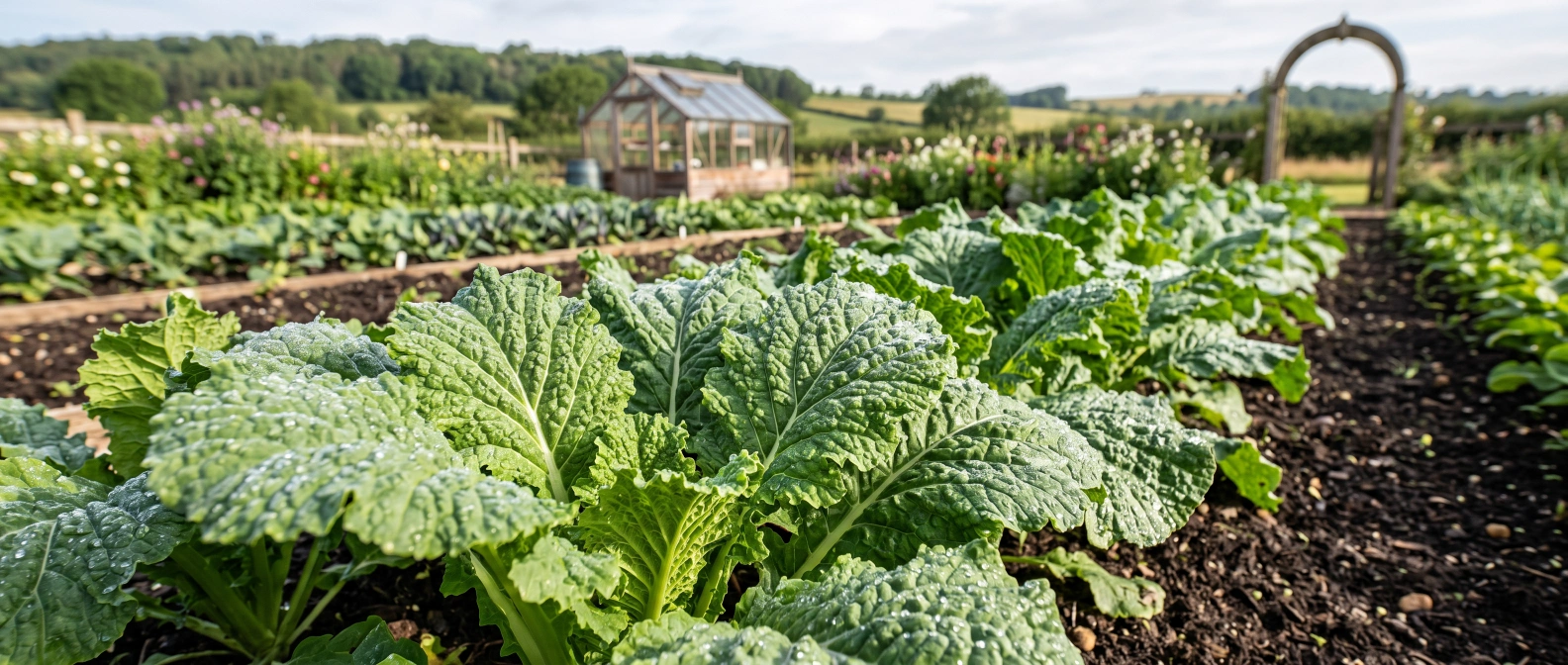
Mustard greens grown as a leafy vegetable and mustard grown for its seed (the source of table mustard) are the same species, Brassica juncea -- one is simply harvested before it flowers, the other left to run to seed. Despite the shared "Brassica" name, this is a different species from both the cabbage/kale group and the turnip/pak choi group, and won't cross with either.
New to terms like isolation distance or outcrossing? See the Seed-Saving Glossary.
Crops Covered by This Guide
Both are Brassica juncea, grown for a different part of the same plant:
Does not cross with cabbage, kale, broccoli or Brussels sprouts (B. oleracea), or with turnip, pak choi, mizuna or Chinese cabbage (B. rapa, covered on our Brassica rapa Group page) -- all different species.
Seed-Saving Difficulty
How It's Pollinated
Insect-pollinated (bees -- high outcrossing)
(High crossing risk)
Scientific name: Brassica juncea
Domestic Crops It Can Cross With
- Other mustard greens varieties
- Mustard grown for seed -- since it's the same plant, letting both flower nearby produces an uncontrolled cross
Wild Relatives & Feral Species
- Charlock / wild mustard (Sinapis arvensis) is a common arable weed but a different genus -- it does not cross with Brassica juncea
Separation Distances Required
Minimum: 500m between flowering varieties
Recommended: 800m for reliable purity
Strict: Bag flower heads and hand-pollinate for guaranteed purity
Seed-Saving Strategies
- Leave a few mustard greens plants uncut through the season to bolt and flower rather than harvesting everything young
- Allow seed pods to dry brown on the plant
- Harvest before pods shatter and thresh
- Store dry -- viable 4-5 years