
Biochar is charcoal produced specifically for incorporation into soil, made by pyrolysis: burning woody material with restricted oxygen, then quenching it with water to stop the burn at the charcoal stage rather than letting it turn to ash. The result is stable, porous carbon that persists in soil for centuries. It's the technique behind the Amazon's famously fertile terra preta soils, and it matters here in a way that goes beyond a nice-to-have.
Why Biochar Matters More in This Climate
As covered in Chapter 1, desert and dryland soils are typically low in organic matter and have very low natural water-holding capacity to begin with. Biochar's porous structure, riddled with microscopic cavities left behind by the woody material it's made from, dramatically improves a soil's ability to retain both water and nutrients at once. That's precisely the two things under the most pressure in an arid climate, which is genuinely well-evidenced and tied directly to the terra preta tradition. In a wetter, more naturally fertile soil, biochar is a beneficial addition; here, it addresses the two most fundamental limitations of the soil itself.
- Water retention -- porous structure holds moisture that would otherwise drain straight through sandy soil, reducing how often irrigation is needed once biochar is established in a bed.
- Nutrient retention -- the same structure holds nutrient ions that would otherwise leach away, particularly valuable in soils that are naturally low in organic matter.
- Permanent structure -- doesn't break down like compost, so every addition is a lasting improvement rather than something that needs annual replacing.
- Microbial habitat -- pore structure gives soil bacteria and fungi a protected home, which matters where native soil biology starts out sparse.
Making Biochar From Dry, Woody, Hard-to-Compost Material
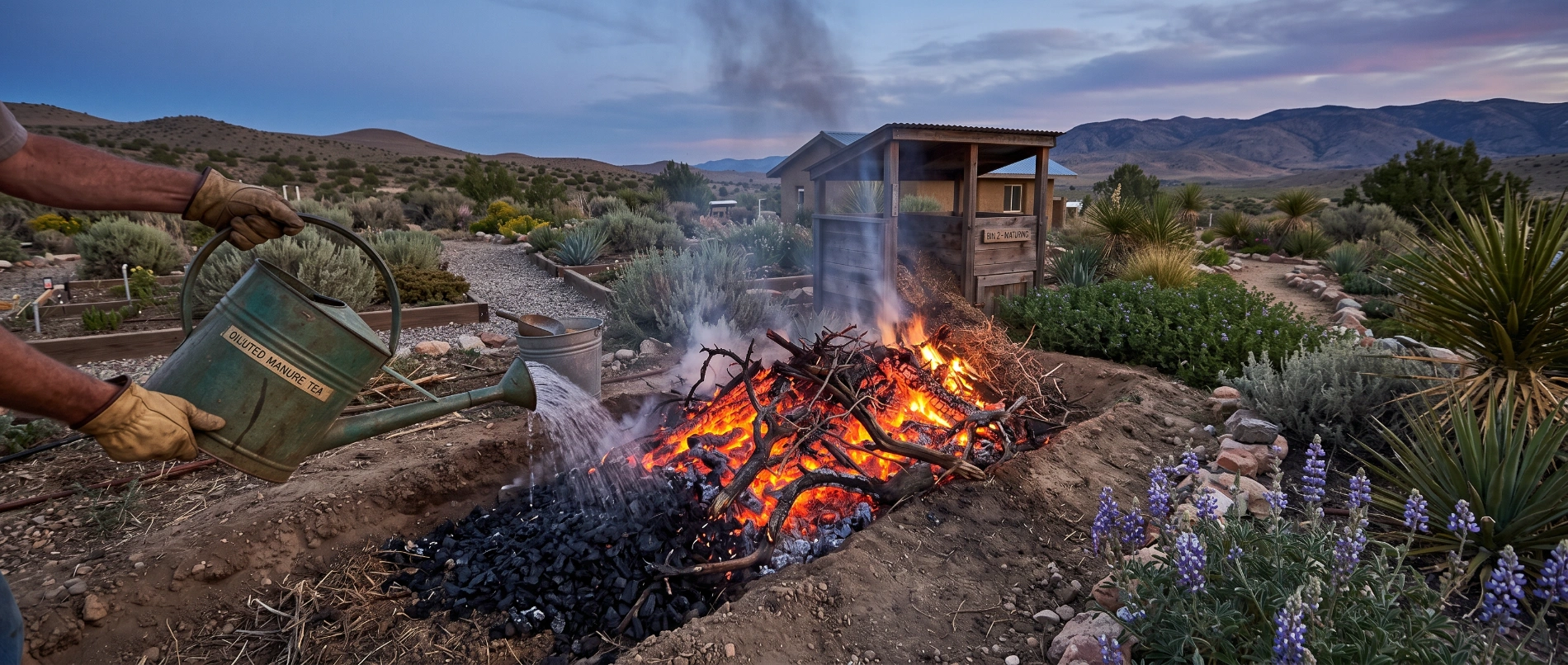
This climate provides exactly the source material biochar needs in abundance: dry woody prunings, dead brush and thorny scrub. As Chapter 5 covers, this is precisely the kind of material that's slow and difficult to break down through ordinary composting. Rather than fighting to compost it directly, converting it to biochar turns a genuinely awkward input into one of the most valuable long-term soil amendments available here.
Dig a shallow trench or pit and build a fire with the dry woody or thorny material, letting it burn down to glowing coals. Before the coals turn to grey ash, extinguish immediately by covering with soil or dousing with water, stopping the burn at the charcoal stage. In a climate where water is precious, covering with soil to smother the fire is often the more sensible choice over pouring water, reserving water quenching for smaller batches where a quick, controlled finish matters more.
Charging Biochar Before Use
Raw biochar can actually rob soil of nutrients initially, its empty pore structure draws nutrients in to fill itself rather than releasing anything useful, so it should never be applied raw and unamended.
- Soak in compost tea -- steep biochar in finished compost tea for several days to weeks before use.
- Soak in diluted urine -- the 1:10 dilution covered in Chapter 8 works well for charging biochar as well as feeding plants directly.
- Mix into finished compost -- combine biochar with finished compost at roughly one part biochar to four parts compost, leave several weeks before applying to soil.
The Water-Saving Case
Once established in a bed, biochar-amended soil needs less frequent irrigation, because it's holding onto a larger share of every watering rather than letting it drain straight through sandy ground. Building biochar levels up gradually over several years, as covered for long-term soil health in Chapter 19, is a genuine long-term investment in reducing how much water this garden needs to stay productive.
Frequently Asked Questions
Why does biochar matter more in a desert or dryland soil than elsewhere?
Sandy, thin desert soils have very low natural water-holding capacity and are typically low in nutrients to begin with, and biochar's porous structure dramatically improves a soil's ability to retain both water and nutrients at once. That's precisely the two things under the most pressure in an arid climate, which is why biochar's benefit here is genuinely larger than in most wetter, more fertile soils.
Can I just dig raw biochar straight into my soil?
No. Raw, unamended biochar can actually rob soil of nutrients initially because its porous structure starts out empty and draws nutrients in to fill itself. It needs to be charged first, by soaking it in compost tea or diluted urine, or mixing it into finished compost, before it goes into the ground.
What's the best source material for biochar in a dry climate?
Dry woody prunings, dead brush and thorny scrub, exactly the kind of material that's genuinely hard to break down through ordinary composting, are ideal for biochar. Rather than fighting to compost slow, woody, thorny material directly, converting it to biochar turns a difficult input into one of the most valuable long-term soil amendments available in this climate.