
A green manure builds soil fertility by growing it in place rather than hauling it in, which sounds like an ideal fit for a climate where transport and inputs are both genuinely hard-won. The honest picture is more limited than that: a season this short and frost-interrupted narrows the field of workable options considerably compared to almost every other climate in this guide.
The Core Principle
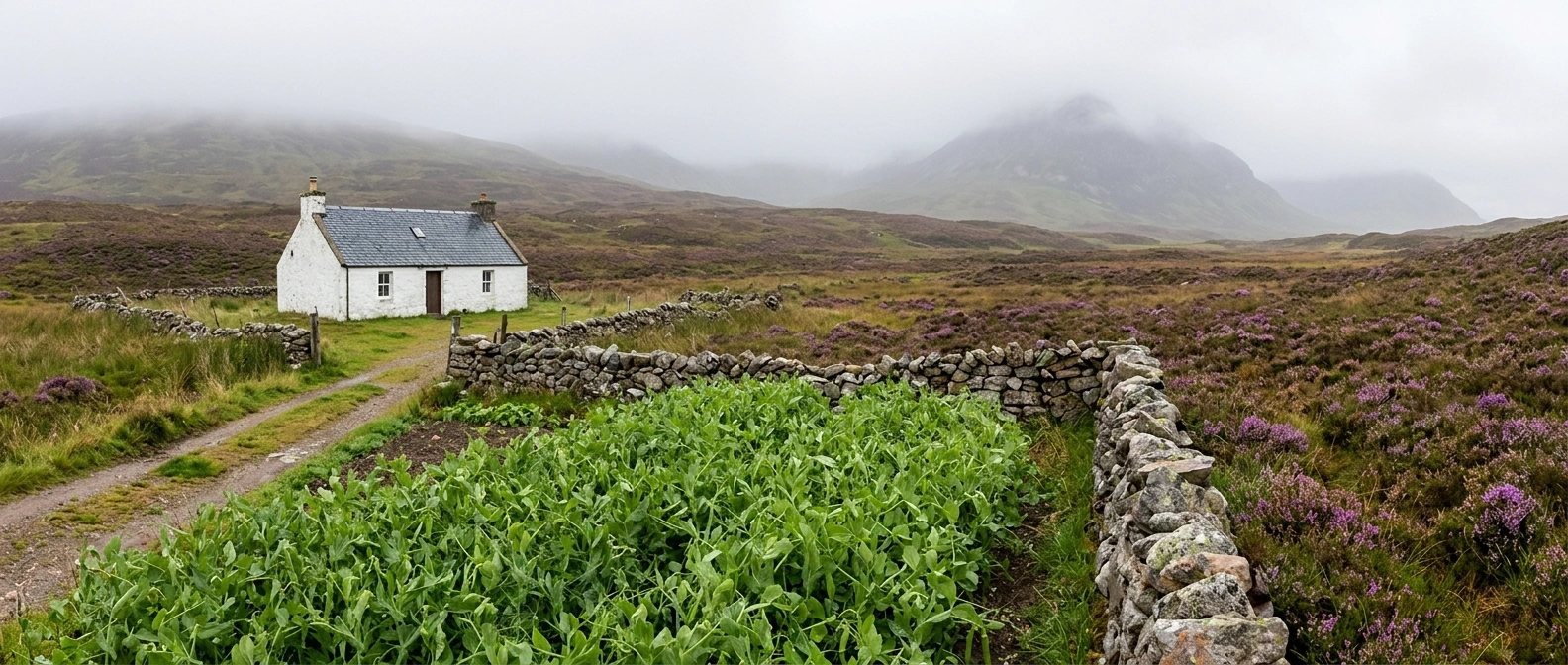
Legume green manures fix nitrogen through bacteria living in nodules on their roots, pulling nitrogen from the air and fixing it into a form plants can use, while most green manures more broadly also build organic matter and soil structure through their root systems as they grow. Once the crop has done its work, it's cut and either dug into the soil or left as a surface mulch to break down, returning the fertility it built directly to the bed it grew in.
The nitrogen cycling here connects directly to the carbon and nitrogen balance covered in Chapter 4: a green manure is, in effect, a way of growing a high-nitrogen input in place rather than sourcing it elsewhere.
A Genuinely Narrow Field of Options
Be honest about this from the outset: genuinely alpine-hardy, fast-enough-maturing green manure options are limited compared to almost every other climate in this guide, given how short and frost-interrupted the season is. Many green manures that work well at lower elevation simply don't have time to establish, fix meaningful nitrogen, and be cut before frost closes the window again.
The most realistic options tend to be very fast, cold-tolerant legume species, of the kind used in short-season mountain agriculture worldwide, such as certain quick-maturing field pea varieties bred or selected for exactly this kind of compressed window. But specific variety availability depends heavily on the exact region and altitude, which means this chapter describes a principle rather than naming one universal crop the way a lower-altitude guide reasonably could: seek out the fastest-maturing, most cold-tolerant legume variety genuinely available locally, and treat that search itself as part of the work.
Frequently Asked Questions
What does a green manure actually do?
It builds soil fertility and structure by growing rather than by being hauled in. Legume green manures fix nitrogen through bacteria living in root nodules, while most green manures also build organic matter and soil structure through their root systems as they grow. The crop is then cut and either dug into the soil or left as a surface mulch to break down, releasing the fertility it built back into the bed.
Are there good green manure options for a high-altitude climate?
Genuinely fewer than in most other climates in this guide, given how short and frost-interrupted the season is. The most realistic options tend to be very fast, cold-tolerant legume varieties, such as certain quick field pea types used in short-season mountain agriculture, that can complete a useful cycle within a genuinely short window. Exact variety availability depends heavily on the specific region and altitude, so the real approach is seeking out the fastest-maturing, most cold-tolerant legume variety available locally, rather than relying on one universal crop.
Should green manures be the primary fertility strategy in this climate?
Probably not on their own. In many genuinely harsh alpine settings, relying primarily on meadow hay and livestock manure for fertility is the more realistic and traditional approach, given how limited and locally-dependent good green manure options are here. Green manures are a useful supplement where the season and variety availability allow, but this chapter shouldn't oversell them as a primary strategy the way gentler climates reasonably can.