
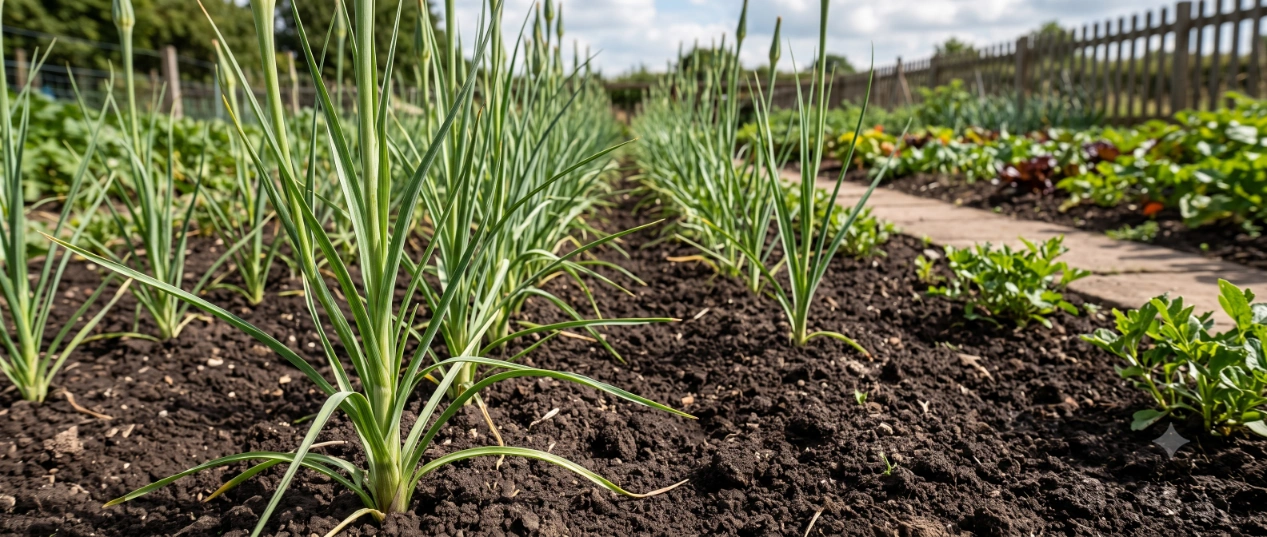
Salsify is one of the most underused crops on this site -- a long, pale taproot with an oyster-like flavour once cooked, and genuinely low-maintenance once it's in the ground. It's also a living larder like parsnip, has no cultivated relative anywhere else in this database, and even the young leaves are edible. Its one real risk is wild salsify, a common roadside relative that can cross with the cultivated crop if it's flowering nearby.
Water need
Genuinely low-maintenance once established -- reasonable watering through dry spells is enough, without the fussiness of turnip or celeriac.
Calories at a glance
390 kcal/kg -- similar in scale to celeriac, ahead of turnip and swede (scale is log-based across all 55 crops in the calculator).
Temperature Range by Month
Month on the bottom, temperature up the side. The pale green background is what the plant can survive at all -- fatal above or below it, labelled directly on the chart where that applies to your zone. The coral band is its ideal range, and only fades in during the months this zone would actually have the crop in the ground -- reusing the exact same sowing/harvesting data as the calendar further down the page. The blue line is real monthly climate data (not a modelled estimate) for a representative rural/agricultural location in this zone -- a small farming town or agricultural research station rather than a major city, to avoid the warmer bias city weather stations have. For the actual verdict on how well this crop does in your zone, see the badge at the top of the page -- that's based on the site's own researched yield figures, not this chart.
Quick Start: Sowing to Harvest
- Sow direct into deep, loose soil. Salsify forms a long taproot, so sow direct into soil that's been worked deep and free of stones -- like carrot and parsnip, it forks or stunts in compacted or stony ground.
- Thin to final spacing. Thin seedlings to around 15cm apart once they're large enough to handle.
- Leave it largely alone through the season. Salsify is genuinely low-maintenance once established -- keep it weeded and reasonably watered, but it doesn't demand much beyond that.
- Harvest from autumn, or leave standing. Roots are ready from autumn and improve in flavour after a light frost. Leave them in the ground and dig as needed through winter, the same living-larder approach as parsnip, in any zone mild enough that the ground doesn't freeze solid.
- Eat the young leaves too. In spring, young salsify leaves can be harvested and eaten like a mild salad green -- a bonus crop from plants left to grow on.
Sowing & Harvesting Calendar
Pick your zone under "Temperature Range by Month" above and this updates too. The Sow row: green is the normal safe sowing window, amber is pushing the season by roughly a month either side, blue is an even earlier under-glass start. The Harvest row has two shades: solid green is the main harvest window, while the striped tail reflects the living-larder option covered in Storage & Preservation below -- realistic only in your zone's milder winters.
Calories & Yield
Salsify is a reasonable calorie crop at about 390 kcal per kg -- similar in scale to celeriac. Mediterranean, Maritime and Continental zones give the best yields here.
| Climate Zone | Yield per plant | Calories per plant | Viability |
|---|---|---|---|
| Tropical / Humid | -- | -- | Not viable |
| Subtropical | 0.2 kg | 78 kcal | Viable |
| Mediterranean | 0.25 kg | 97.5 kcal | Viable -- best yield |
| Temperate Maritime | 0.25 kg | 97.5 kcal | Viable -- best yield |
| Temperate Continental | 0.25 kg | 97.5 kcal | Viable -- best yield |
| Cool / Boreal | 0.2 kg | 78 kcal | Viable |
| Arid / Semi-Arid | -- | -- | Not viable |
| Highland / Alpine | 0.2 kg | 78 kcal | Viable |
Figures per plant sown, from the site's own crop database.
Varieties Worth Knowing
Salsify has only a couple of long-established named varieties in wide circulation, rather than the broad range most root crops offer. Both below are open-pollinated (OP), meaning seed saved from them breeds true and is worth keeping under this site's seed-saving approach; neither is an F1 hybrid.
Seed Saving -- Quick Guide
Salsify's wispy, dandelion-like seed heads disperse on the wind within days of opening, and wild goatsbeard relatives growing nearby can cross with your crop before you've harvested a thing.
SERVINGS, NOT DAILY CALORIES This works out plate-sized servings of salsify from your seed during its fresh harvest window only, not your group's full daily calorie needs. For that, use the main calculator.
BIENNIAL Salsify is a biennial, not an annual -- it doesn't produce seed in its first year. Roots grow in year one, a few overwintered roots flower and set seed in year two, and that seed is only ready to sow in year three. If you're starting from scratch with no ongoing seed supply, that means having enough seed on hand for both year one's and year two's sowing up front. Plan for roughly double the seed quantity below if that's your situation.
Estimated for your selected zone above, using this site's own germination, loss and yield figures for salsify -- a helping is roughly what you'd put on a plate as part of a meal with other veg. Treat it as a planning estimate, not a promise.
Storage & Preservation
The site's own crop data calls salsify a living larder -- roots can be left in the ground and dug as needed right through winter, the same as parsnip, in any zone mild enough that the ground doesn't freeze solid.
Where the ground does freeze hard, lift before that happens and store the unwashed roots in slightly damp sand in a cool shed or cellar for a few months -- though leaving them in the ground where possible gives the best flavour and texture.
Growing Salsify Without Bought Inputs
Salsify is genuinely low-fuss -- it doesn't share the significant pest pressure that carrot, turnip or the brassicas deal with on this site, which is part of why the crop database rates it "reliable."
Deep, loose, stone-free soil at sowing time is the main input-free step that matters -- like carrot and parsnip, salsify's long taproot forks or stunts in compacted or stony ground, and there's no fixing that once it's happened.
Removing flowering wild salsify nearby, where it grows locally, protects both this crop's seed purity and, being a documented cross-partner, is worth doing before it seeds regardless of whether you're saving seed this particular year.
Frequently Asked Questions
What does salsify actually taste like?
An oyster-like flavour when cooked, which is where its old name "vegetable oyster" comes from. It's an underused crop, but the site's own crop data rates it a reliable one -- and the young leaves are edible too, so nothing about the plant goes to waste.
Does salsify cross-pollinate with anything else on this site?
No -- salsify (Tragopogon porrifolius) has no cultivated relative anywhere else in this database. There's no cross-pollination risk from any other crop covered on this site.
Is there a wild-relative risk with salsify, like carrot has with wild carrot?
Yes, a similar shape of problem. Wild or western salsify (Tragopogon dubius) is a common roadside weed across many temperate regions and is documented to hybridise with cultivated salsify. If it grows wild nearby, treat it the same way the Carrot page treats wild carrot -- remove flowering plants within isolation distance before they set seed.
How cold and hot can salsify survive?
Roughly -15°C to 29°C, with ideal growth in the 10-24°C range. It's genuinely cold-hardy once established and tolerates light frost well, though the crown can be damaged by a hard freeze right at ground level before it's had time to establish.
Can I leave salsify in the ground over winter?
Yes -- the site's own crop data models it as a living larder, the same as parsnip. Dig roots as needed through winter rather than lifting the whole crop at once, in any zone mild enough that the ground doesn't freeze solid.
Is salsify a good calorie crop for self-sufficiency?
Reasonable -- around 390 kcal per kg, similar in scale to celeriac and ahead of turnip and swede. Its bigger value is as an underused, low-fuss crop that reliably fills a winter root slot without much attention.