
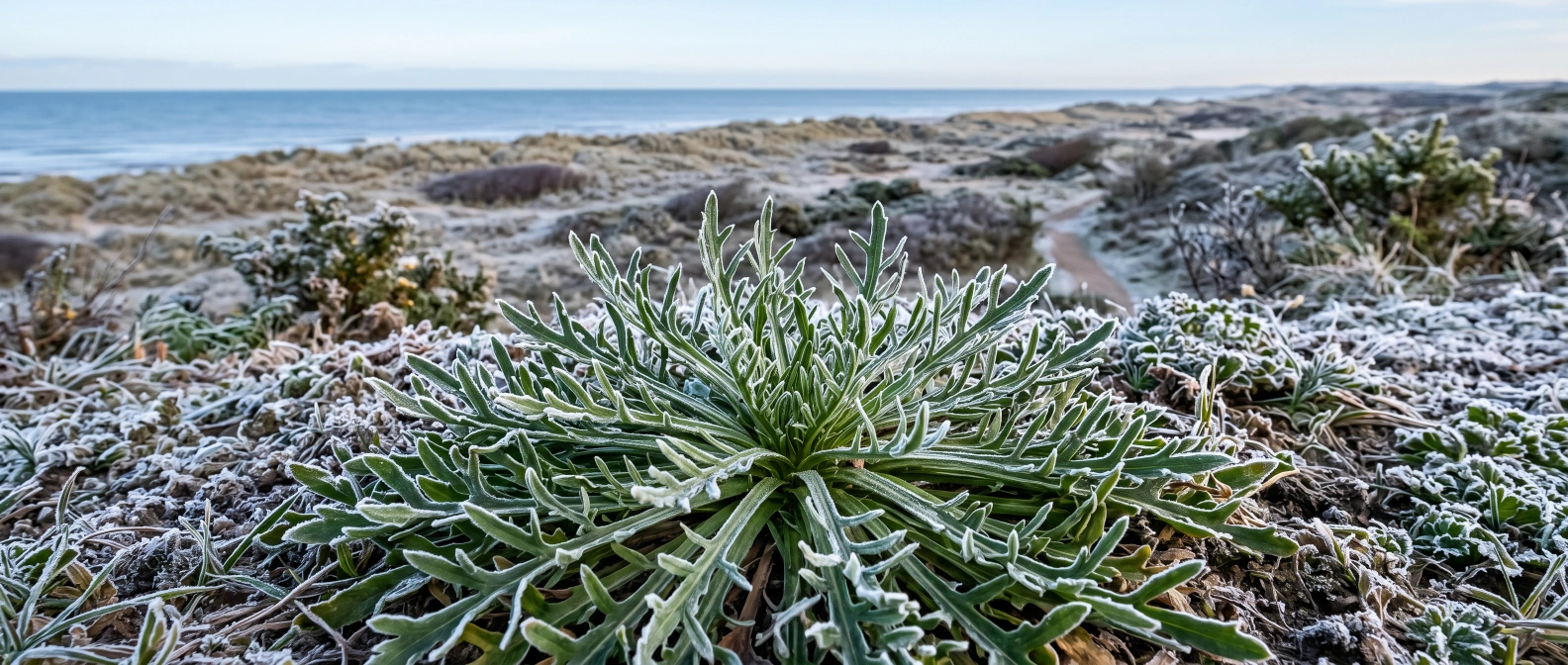
A hardy winter salad with genuinely unusual texture, per the crop database's own description -- very cold hardy, with narrow, deeply lobed, almost antler-shaped leaves unlike anything else on this hub. Also called erba stella or buck's-horn plantain.
Water need
Genuinely tough and low-water, unsurprising given its weedy relatives -- one of the most forgiving crops on this whole site.
Calories at a glance
180 kcal/kg -- grown for its unusual texture and genuine winter hardiness rather than calorie density (scale is log-based across all 55 core crops in the calculator).
Temperature Range by Month
Month on the bottom, temperature up the side. The pale green background is what the plant can survive at all -- fatal above or below it, labelled directly on the chart where that applies to your zone. The coral band is its ideal range, and only fades in during the months this zone would actually have the crop in the ground -- reusing the exact same sowing/harvesting data as the calendar further down the page. The blue line is real monthly climate data (not a modelled estimate) for a representative rural/agricultural location in this zone -- a small farming town or agricultural research station rather than a major city, to avoid the warmer bias city weather stations have. For the actual verdict on how well this crop does in your zone, see the badge at the top of the page -- that's based on the site's own researched yield figures, not this chart.
Quick Start: Sowing to Storage
- Sow direct in late summer or autumn. Sow direct, timing for late summer or early autumn to establish plants for a genuine winter harvest.
- Thin to final spacing. Thin seedlings once established, leaving enough room for the narrow, spreading rosettes to develop.
- Let plants stand through winter. Leave plants in the ground through the cold months -- genuine cold hardiness means they keep producing when little else survives.
- Harvest outer leaves regularly. Pick outer leaves as needed, leaving the centre growing point intact for continued production.
- Use fresh in salads. Use fresh in salads, where its unusual texture and mild flavour add genuine variety alongside this hub's other winter greens.
Sowing & Harvesting Calendar
Pick your zone under "Temperature Range by Month" above and this updates too. The harvest window here runs deep into winter in most zones, consistent with minutina's genuine cold hardiness.
Calories & Yield
Tropical, Subtropical and Mediterranean zones tie for the best yield here, and every zone shows at least a challenging window.
| Climate Zone | Yield per plant | Calories per plant | Viability |
|---|---|---|---|
| Tropical / Humid | 1.5 kg | 270 kcal | Viable -- best yield |
| Subtropical | 1.5 kg | 270 kcal | Viable -- best yield |
| Mediterranean | 1.5 kg | 270 kcal | Viable -- best yield |
| Temperate Maritime | 1.2 kg | 216 kcal | Viable |
| Temperate Continental | 1.2 kg | 216 kcal | Viable |
| Cool / Boreal | 0.48 kg | 86.4 kcal | Challenging (60% yield) |
| Arid / Semi-Arid | 0.48 kg | 86.4 kcal | Challenging (60% yield) |
| Highland / Alpine | 0.48 kg | 86.4 kcal | Challenging (60% yield) |
Figures per plant sown, from the site's own crop database. Boreal, Arid and Alpine already reflect the 60% penalty applied to challenging zones.
A note on varieties: minutina is mostly grown as a single undifferentiated type -- real named-cultivar diversity is genuinely thin.
Seed Saving -- Quick Guide
Minutina is the cultivated form of buckshorn plantain -- a plant many gardeners already have growing wild in lawns and paths. That wild form is the same species and will cross with your crop if flowering nearby.
SERVINGS, NOT DAILY CALORIES This works out plate-sized servings of minutina from your seed during its fresh harvest window only, not your group's full daily calorie needs. For that, use the main calculator.
Estimated for your selected zone above, using this site's own germination, loss and yield figures for minutina -- a helping is roughly what you'd put on a plate as part of a meal with other veg. Treat it as a planning estimate, not a promise.
Storage & Preservation
Fresh leaves keep for about a week refrigerated -- similar to most tender salad greens.
There's no meaningful long-term preservation route for this crop -- it's best treated as a continuously-harvested fresh winter salad green rather than something to store or bank.
Growing Minutina Without Bought Inputs
Genuinely one of the toughest, most trouble-free crops on this entire site -- unsurprising, given its close relatives are weeds that thrive with zero cultivation at all.
Few pests bother it seriously -- slugs on young seedlings are about the only real early risk.
Hand-picking slugs at dusk while plants are small is a simple, genuinely effective input-free measure.
Frequently Asked Questions
Is minutina related to any other crop on this site?
No -- genuinely not. Minutina is Plantago coronopus, in the Plantaginaceae family, whose better-known members are common lawn weeds (broadleaf plantain). It's the real botanical oddball of this entire hub -- every other leafy green here traces to a recognisable vegetable or salad family; minutina's closest relatives are weeds most gardeners spend their time pulling out.
What does minutina's "unusual texture" actually mean?
The crop database's own phrase refers to its narrow, deeply lobed, almost antler-shaped leaves -- a genuinely different look and texture from the broad, flat leaves of most salad greens on this hub.
How cold-hardy is minutina really?
Very -- the crop database is direct: very cold hardy. It's one of this hub's most reliably cold-tolerant winter salad crops, staying productive through conditions that would finish off far more tender greens.