
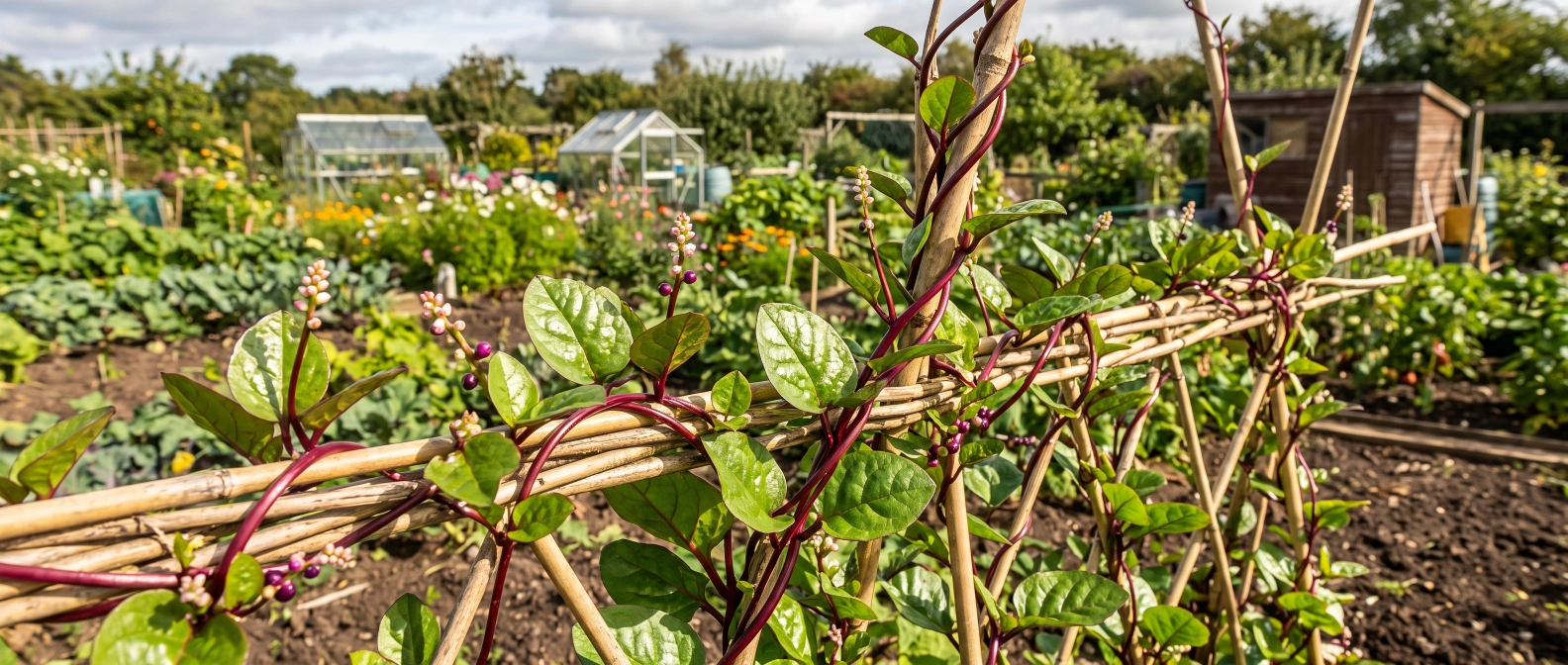
A tropical climbing spinach substitute, per the crop database's own description, needing genuine heat and physical support to thrive. The most heat-demanding leafy green on this whole hub -- it's not viable at all in four of the eight zones this site models, and only challenging even in Mediterranean.
Water need
Wants consistent moisture through its long, hot growing season -- typical of a vigorous tropical climbing vine.
Calories at a glance
190 kcal/kg -- grown for its vigour and productivity in genuinely hot climates rather than calorie density (scale is log-based across all 55 core crops in the calculator).
Temperature Range by Month
Month on the bottom, temperature up the side. The pale green background is what the plant can survive at all -- fatal above or below it, labelled directly on the chart where that applies to your zone. The coral band is its ideal range, and only fades in during the months this zone would actually have the crop in the ground -- reusing the exact same sowing/harvesting data as the calendar further down the page. The blue line is real monthly climate data (not a modelled estimate) for a representative rural/agricultural location in this zone -- a small farming town or agricultural research station rather than a major city, to avoid the warmer bias city weather stations have. For the actual verdict on how well this crop does in your zone, see the badge at the top of the page -- that's based on the site's own researched yield figures, not this chart.
Quick Start: Sowing to Storage
- Sow once it's genuinely warm. Sow direct or start indoors once frost risk has fully passed and the soil is warm -- Malabar spinach needs sustained tropical-style heat to germinate and grow well.
- Provide a trellis from the start. Set up a sturdy trellis or support before planting -- this is a genuine climbing vine and needs something to climb from early on.
- Train the vine as it grows. Guide young shoots onto the support as needed -- once established, the vine climbs vigorously on its own.
- Harvest shoot tips and leaves. Pick young shoot tips and leaves regularly -- this both provides a harvest and encourages the vine to branch out further.
- Keep picking through the whole warm season. Harvest continuously through summer -- a well-established vine in genuinely warm conditions produces prolifically for months.
Sowing & Harvesting Calendar
Pick your zone under "Temperature Range by Month" above and this updates too. Maritime, Continental, Boreal and Alpine all show no window at all -- Malabar spinach needs more sustained heat than almost any other leafy green on this site.
Calories & Yield
Tropical gives the clear best yield here, and like several other genuine tropical specialists on this site, only three of the eight zones support it at all.
| Climate Zone | Yield per plant | Calories per plant | Viability |
|---|---|---|---|
| Tropical / Humid | 3.5 kg | 665 kcal | Viable -- best yield |
| Subtropical | 3.0 kg | 570 kcal | Viable |
| Mediterranean | 1.2 kg | 228 kcal | Challenging (60% yield) |
| Temperate Maritime | -- | -- | Not viable |
| Temperate Continental | -- | -- | Not viable |
| Cool / Boreal | -- | -- | Not viable |
| Arid / Semi-Arid | 1.2 kg | 228 kcal | Challenging (60% yield) |
| Highland / Alpine | -- | -- | Not viable |
Figures per plant sown, from the site's own crop database. Mediterranean and Arid already reflect the 60% penalty applied to challenging zones.
Varieties Worth Knowing
Malabar spinach comes in two distinct forms, differing mainly in stem colour and vigour. Both below are open-pollinated (OP), meaning seed saved from them breeds true and is worth keeping under this site's seed-saving approach; neither is an F1 hybrid.
Seed Saving -- Quick Guide
Malabar spinach isn't related to true spinach despite the name -- it's mostly self-pollinating, with red-stem and green-stem varieties crossing with each other if grown close together.
SERVINGS, NOT DAILY CALORIES This works out plate-sized servings of malabar spinach from your seed during its fresh harvest window only, not your group's full daily calorie needs. For that, use the main calculator.
Estimated for your selected zone above, using this site's own germination, loss and yield figures for malabar spinach -- a helping is roughly what you'd put on a plate as part of a meal with other veg. Treat it as a planning estimate, not a promise.
Storage & Preservation
Fresh leaves and shoots keep for only a few days refrigerated -- like true spinach, it wilts and softens quickly once picked.
For longer-term preservation, it blanches and freezes reasonably well, though it's most valued as a continuous fresh harvest through a long hot season rather than something to bank for later.
Growing Malabar Spinach Without Bought Inputs
A genuinely vigorous vine once it gets going in warm conditions, with few serious pest problems in a home garden setting.
Slugs on young plants are about the main early risk, the same as most tender young seedlings.
Hand-picking slugs at dusk while plants are small is a simple, genuinely effective input-free measure.
Frequently Asked Questions
Is Malabar spinach related to true spinach?
No -- genuinely not. Malabar spinach is Basella alba, in its own family, Basellaceae, completely unrelated to true spinach (Spinacia oleracea). It's called a spinach substitute purely for how it's cooked and eaten.
Why does Malabar spinach need a trellis?
Because it's genuinely a climbing vine, per the crop database's own description -- needs heat and support. It's the only true climber among this hub's leafy greens; every other crop here grows as a low rosette, clump or sprawling groundcover instead.
Why is Malabar spinach only viable in a few zones?
It's the most heat-demanding "spinach substitute" on this whole hub. This site's yield data marks it not viable at all in Maritime, Continental, Boreal or Alpine zones, and only challenging even in Mediterranean -- it genuinely needs sustained tropical or subtropical heat to thrive.