
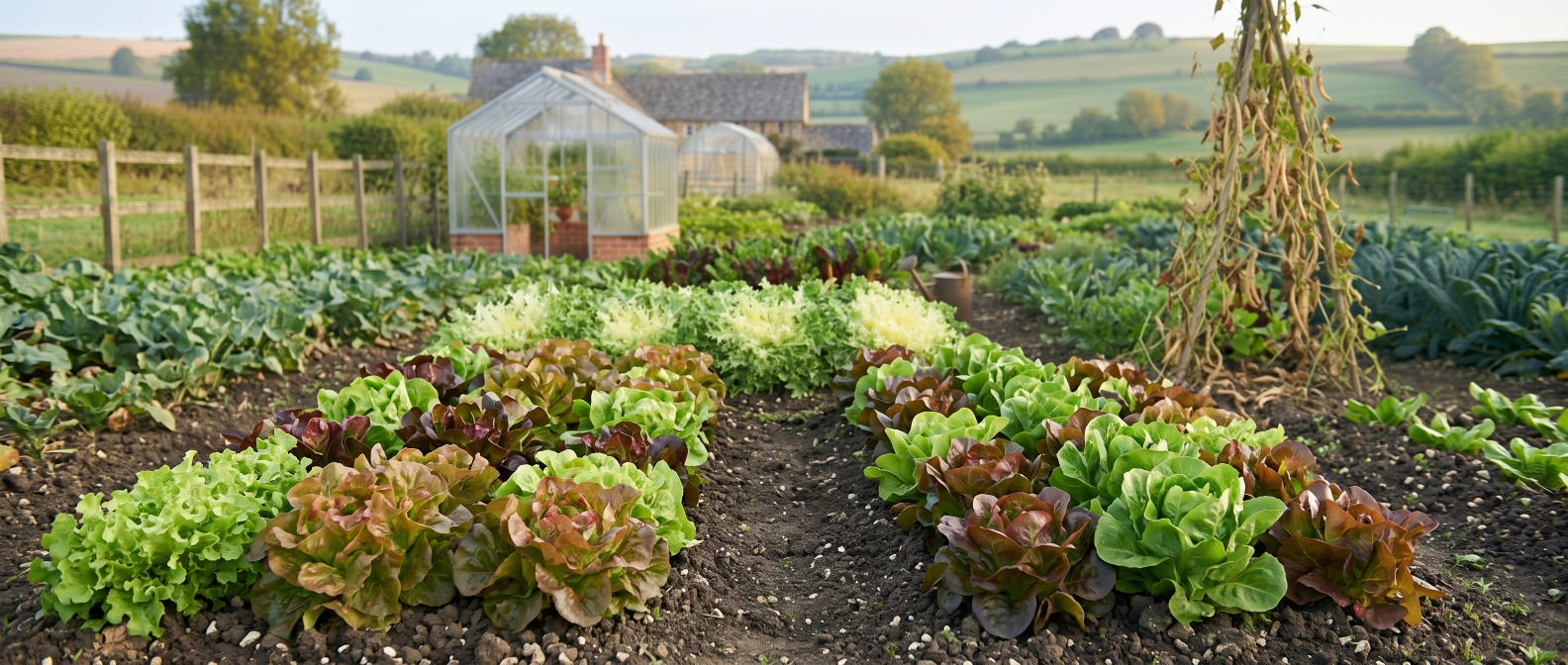
Lettuce is about as low-risk as seed saving gets on this site -- its flowers self-fertilise essentially completely, and it has no cultivated relative anywhere else in this database to worry about crossing with. Its real challenge is speed: sown successionally like radish or spring onion, and prone to bolting in heat, so cut-and-come-again types and bolt-resistant summer varieties matter more than any storage technique.
Water need
Consistent moisture keeps growth steady and the leaves sweet -- drying out is a common trigger for premature bolting and bitterness.
Calories at a glance
150 kcal/kg -- one of the lowest-calorie crops on this entire site (scale is log-based across all 55 crops in the calculator).
Temperature Range by Month
Month on the bottom, temperature up the side. The pale green background is what the plant can survive at all -- fatal above or below it, labelled directly on the chart where that applies to your zone. The coral band is its ideal range, and only fades in during the months this zone would actually have the crop in the ground -- reusing the exact same sowing/harvesting data as the calendar further down the page. The blue line is real monthly climate data (not a modelled estimate) for a representative rural/agricultural location in this zone -- a small farming town or agricultural research station rather than a major city, to avoid the warmer bias city weather stations have. For the actual verdict on how well this crop does in your zone, see the badge at the top of the page -- that's based on the site's own researched yield figures, not this chart.
Quick Start: Sowing to Harvest
- Sow direct, little and often. Sow direct, thinly, every 2-3 weeks through your zone's sowing window to keep a continuous supply coming rather than one glut.
- Choose bolt-resistant varieties for summer sowings. Standard varieties bolt fast in summer heat -- switch to a bolt-resistant type for sowings made in the warmest part of the season.
- Keep watering even. Consistent moisture keeps growth steady and the leaves sweet -- drying out is a common trigger for premature bolting and bitterness.
- Harvest as cut-and-come-again where possible. For loose-leaf and cut-and-come-again types, take outer leaves as needed rather than cutting the whole plant at once, extending a single sowing's harvest by weeks.
- Eat fresh. Lettuce doesn't store the way root crops do -- pick only what you need and eat it within days for the best texture and flavour.
Sowing & Harvesting Calendar
Pick your zone under "Temperature Range by Month" above and this updates too. In warmer zones, notice two separate sow windows rather than one continuous block -- spring and late-summer batches, avoiding the hottest, bolt-prone months in between.
Calories & Yield
Lettuce is the lowest calorie density crop in this category at about 150 kcal per kg. Five zones -- Tropical, Subtropical, Mediterranean, Maritime and Continental -- all give the same best yield here.
| Climate Zone | Yield per plant | Calories per plant | Viability |
|---|---|---|---|
| Tropical / Humid | 0.15 kg | 22.5 kcal | Viable -- best yield |
| Subtropical | 0.15 kg | 22.5 kcal | Viable -- best yield |
| Mediterranean | 0.15 kg | 22.5 kcal | Viable -- best yield |
| Temperate Maritime | 0.15 kg | 22.5 kcal | Viable -- best yield |
| Temperate Continental | 0.15 kg | 22.5 kcal | Viable -- best yield |
| Cool / Boreal | 0.12 kg | 18 kcal | Viable |
| Arid / Semi-Arid | 0.08 kg | 7.2 kcal | Viable -- challenging (60% yield) |
| Highland / Alpine | 0.10 kg | 15 kcal | Viable |
Figures per plant sown, from the site's own crop database. Arid's yield already reflects the 60% penalty the calculator applies where a zone is rated "challenging" rather than fully viable. Lettuce is viable in every one of this site's eight zones.
Varieties Worth Knowing
Lettuce varieties differ in leaf type, bolt-resistance and speed to maturity -- loose-leaf types for quick cut-and-come-again harvests, firmer types for a more substantial head. All the varieties below are open-pollinated (OP), meaning seed saved from them breeds true and is worth keeping under this site's seed-saving approach; none are F1 hybrids.
Seed Saving -- Quick Guide
Lettuce is self-pollinating with very low crossing risk between varieties -- one of the easiest and most forgiving seeds to save on this site.
SERVINGS, NOT DAILY CALORIES This works out plate-sized servings of lettuce from your seed during its fresh harvest window only, not your group's full daily calorie needs. For that, use the main calculator.
Estimated for your selected zone above, using this site's own germination, loss and yield figures for lettuce -- a helping is roughly what you'd put on a plate as part of a meal with other veg. Treat it as a planning estimate, not a promise.
Storage & Preservation
Lettuce isn't described as a storage crop in the site's own crop data at all -- it's grown to be picked and eaten fresh, typically within days.
There's no meaningful way to preserve lettuce for the long term the way root crops or dried pulses store -- its role here is fresh variety and volume through the growing season, kept coming by succession sowing rather than by storage.
Growing Lettuce Without Bought Inputs
Slugs and snails are the main threat to lettuce, especially young seedlings, which can be stripped overnight.
Beer traps, crushed eggshell barriers, or hand-picking at dusk are all genuinely effective input-free defences against slugs -- none require anything bought in.
Even watering does double duty here -- besides preventing bolting, well-fed, unstressed plants recover from minor slug damage more readily than plants already checked by drought.
Frequently Asked Questions
Does lettuce cross-pollinate with anything else on this site?
No -- lettuce has no cultivated relative anywhere else in this database. It's also one of the lowest-risk crops on the whole site for cross-pollination generally: its flowers self-fertilise essentially completely, before most insects would even get a chance.
Why is cut-and-come-again lettuce more efficient than head lettuce?
Because you're harvesting outer leaves repeatedly from the same plant rather than taking the whole thing at once -- one sowing keeps producing for weeks instead of a single cut. It's a real efficiency gain for a small growing space.
How cold and hot can lettuce survive?
Roughly -7°C to 24°C once hardened off, though young seedlings are more frost-tender than established plants. Heat is the bigger everyday problem -- sustained temperatures above about 24°C reliably trigger bolting and bitter flavour, which is why bolt-resistant varieties matter for a summer sowing.
Why is lettuce only "challenging" rather than fully viable in Arid zones?
Lettuce needs fairly consistent moisture and cool conditions to avoid bolting and bitterness, and genuine aridity works against both -- the crop can still be grown there, just with a real yield penalty, which is what the "challenging" rating reflects.
Is lettuce a good calorie crop for self-sufficiency?
No -- at around 150 kcal per kg, it's one of the lowest-calorie crops on this entire site. Its value is fresh variety, volume, and filling out meals, not calories.