
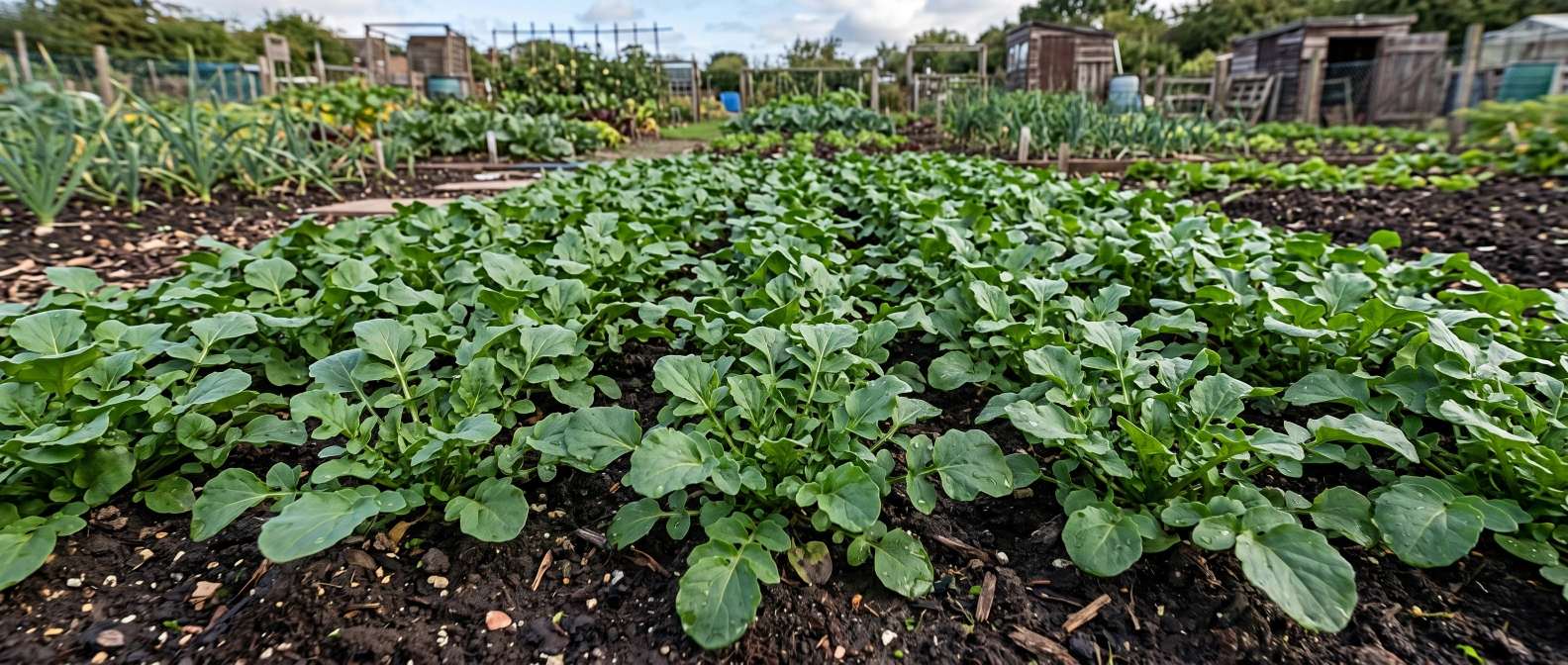
A hardy watercress substitute, per the crop database's own description, with a genuinely peppery flavour and reliable overwintering performance. Where watercress demands running or standing water, land cress does the same flavour job in nothing more than ordinary garden soil.
Water need
Ordinary garden watering is all it needs -- genuinely the whole appeal versus watercress's demanding wet-soil requirement.
Calories at a glance
240 kcal/kg -- grown for its peppery flavour and cold hardiness rather than calorie density (scale is log-based across all 55 core crops in the calculator).
Temperature Range by Month
Month on the bottom, temperature up the side. The pale green background is what the plant can survive at all -- fatal above or below it, labelled directly on the chart where that applies to your zone. The coral band is its ideal range, and only fades in during the months this zone would actually have the crop in the ground -- reusing the exact same sowing/harvesting data as the calendar further down the page. The blue line is real monthly climate data (not a modelled estimate) for a representative rural/agricultural location in this zone -- a small farming town or agricultural research station rather than a major city, to avoid the warmer bias city weather stations have. For the actual verdict on how well this crop does in your zone, see the badge at the top of the page -- that's based on the site's own researched yield figures, not this chart.
Quick Start: Sowing to Storage
- Sow direct in ordinary soil. Sow direct into ordinary garden soil -- no special wet conditions needed, unlike watercress.
- Thin to final spacing. Thin seedlings once established, leaving enough room for rosettes to develop.
- Sow in late summer for a winter crop. For a genuine overwintering harvest, time a sowing for late summer so plants are established before the coldest weather arrives.
- Harvest outer leaves regularly. Pick outer leaves as needed, leaving the centre growing point intact for continued production.
- Keep picking right through winter. Continue harvesting through cold months in mild zones -- this is genuinely one of the hardiest salad crops on this hub.
Sowing & Harvesting Calendar
Pick your zone under "Temperature Range by Month" above and this updates too. Most zones show an autumn sowing window with a harvest running well into winter -- consistent with land cress's genuine overwintering habit.
Calories & Yield
Tropical, Subtropical and Mediterranean zones tie for the best yield here, and every zone shows at least a challenging window.
| Climate Zone | Yield per plant | Calories per plant | Viability |
|---|---|---|---|
| Tropical / Humid | 1.5 kg | 360 kcal | Viable -- best yield |
| Subtropical | 1.5 kg | 360 kcal | Viable -- best yield |
| Mediterranean | 1.5 kg | 360 kcal | Viable -- best yield |
| Temperate Maritime | 1.2 kg | 288 kcal | Viable |
| Temperate Continental | 1.2 kg | 288 kcal | Viable |
| Cool / Boreal | 0.48 kg | 115.2 kcal | Challenging (60% yield) |
| Arid / Semi-Arid | 0.48 kg | 115.2 kcal | Challenging (60% yield) |
| Highland / Alpine | 0.48 kg | 115.2 kcal | Challenging (60% yield) |
Figures per plant sown, from the site's own crop database. Boreal, Arid and Alpine already reflect the 60% penalty applied to challenging zones.
A note on varieties: land cress (American/upland cress) is mostly grown as a single undifferentiated type -- real named-cultivar diversity is genuinely thin.
Seed Saving -- Quick Guide
Land cress is often confused with true watercress, but it's a different genus and won't cross with it -- the real crossing risk is wild yellow rocket, a common roadside weed in the same genus.
SERVINGS, NOT DAILY CALORIES This works out plate-sized servings of land cress from your seed during its fresh harvest window only, not your group's full daily calorie needs. For that, use the main calculator.
BIENNIAL Land Cress is a biennial, not an annual -- it doesn't produce seed in its first year. Plants grow through year one, a few overwintered plants flower and set seed in year two, and that seed is only ready to sow in year three. If you're starting from scratch with no ongoing seed supply, that means having enough seed on hand for both year one's and year two's sowing up front. Plan for roughly double the seed quantity below if that's your situation.
Estimated for your selected zone above, using this site's own germination, loss and yield figures for land cress -- a helping is roughly what you'd put on a plate as part of a meal with other veg. Treat it as a planning estimate, not a promise.
Storage & Preservation
Fresh leaves keep for about a week refrigerated -- similar to most tender salad greens.
There's no strong long-term preservation route for this crop -- it's best treated as a continuously-harvested fresh green through its long autumn-to-spring season rather than something to store or bank.
Growing Land Cress Without Bought Inputs
Genuinely tough and low-maintenance -- its cold hardiness means it needs little protection through winter in most zones.
Flea beetles can target young seedlings, the same risk faced by this hub's other brassica-family crops.
Fine mesh over young plants until they're established is a simple, genuinely effective input-free defence.
Frequently Asked Questions
Is land cress the same plant as watercress?
No -- genuinely different plants. Land cress is Barbarea verna; watercress is Nasturtium officinale. Both are in the Brassicaceae family and taste similarly peppery, which is why land cress is called a watercress substitute, but they're different genera and don't cross-pollinate.
Does land cress need wet soil like watercress?
No -- and that's the whole point of growing it. Land cress grows in ordinary garden soil, giving a genuinely similar peppery flavour to watercress without needing a stream, spring or permanently wet growing spot.
How hardy is land cress really?
Genuinely very hardy -- the crop database calls it out directly: overwinters well. It's one of this hub's reliable winter salad crops, staying productive through cold conditions that would finish off more tender greens.