
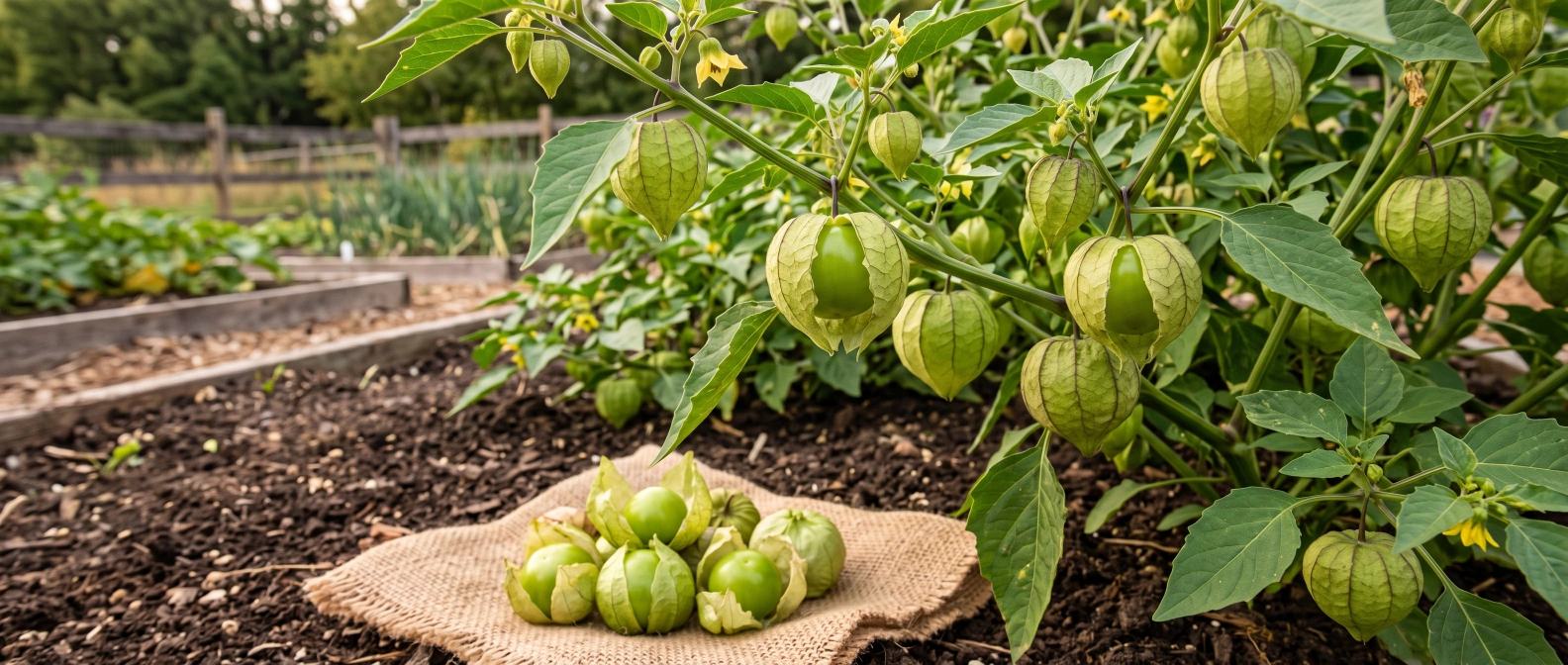
Tomatillo is a genuine outlier in this category: grow it like tomatoes, per the crop database's own instruction, but you need two plants, not one -- tomatillo is self-incompatible, meaning a lone plant's own pollen can't fertilise its own flowers, so it sets little or no fruit in isolation. Ripeness shows itself clearly: the papery husk fills out and splits as the fruit inside matures.
Water need
Needs consistent moisture through fruit set, much like tomato, though it copes with short dry spells better once established.
Calories at a glance
320 kcal/kg -- similar territory to tomato, grown mainly for flavour and variety rather than as a calorie staple (scale is log-based across all 55 core crops in the calculator).
Temperature Range by Month
Month on the bottom, temperature up the side. The pale green background is what the plant can survive at all -- fatal above or below it, labelled directly on the chart where that applies to your zone. The coral band is its ideal range, and only fades in during the months this zone would actually have the crop in the ground -- reusing the exact same sowing/harvesting data as the calendar further down the page. The blue line is real monthly climate data (not a modelled estimate) for a representative rural/agricultural location in this zone -- a small farming town or agricultural research station rather than a major city, to avoid the warmer bias city weather stations have. For the actual verdict on how well this crop does in your zone, see the badge at the top of the page -- that's based on the site's own researched yield figures, not this chart.
Quick Start: Sowing to Storage
- Start indoors like tomatoes. Sow indoors 6-8 weeks before the last frost, exactly like starting tomatoes, then harden off and transplant once frost risk has passed.
- Plant at least two plants together. Always plant two or more genetically distinct tomatillo plants near each other -- a single plant is genuinely self-incompatible and will set little to no fruit alone.
- Stake or cage sprawling plants. Tomatillo plants get large and sprawling -- support them the same way you would an indeterminate tomato to keep fruit off the ground.
- Harvest once the husk fills and splits. Pick fruit once the papery husk is filled out and starts to split or turn papery-tan -- this is the crop database's own ripeness marker.
- Store in the husk, don't wash until use. Leave the husk on and store somewhere cool and dry -- it protects the fruit and meaningfully extends how long it keeps before use.
Sowing & Harvesting Calendar
Pick your zone under "Temperature Range by Month" above and this updates too. Boreal and Alpine show no window at all -- this site's own yield data marks tomatillo as not viable in either.
Calories & Yield
Tropical gives the best yield here, well ahead of the Maritime and Continental zones where it's marked challenging.
| Climate Zone | Yield per plant | Calories per plant | Viability |
|---|---|---|---|
| Tropical / Humid | 2.5 kg | 800 kcal | Viable -- best yield |
| Subtropical | 2.0 kg | 640 kcal | Viable |
| Mediterranean | 2.0 kg | 640 kcal | Viable |
| Temperate Maritime | 0.72 kg | 230.4 kcal | Challenging (60% yield) |
| Temperate Continental | 0.9 kg | 288 kcal | Challenging (60% yield) |
| Cool / Boreal | -- | -- | Not viable |
| Arid / Semi-Arid | 0.9 kg | 288 kcal | Challenging (60% yield) |
| Highland / Alpine | -- | -- | Not viable |
Figures per plant sown, from the site's own crop database. Maritime, Continental and Arid already reflect the 60% penalty applied to challenging zones.
Varieties Worth Knowing
Tomatillo varieties mainly differ in colour and fruit size. Both below are open-pollinated (OP), meaning seed saved from them breeds true and is worth keeping under this site's seed-saving approach; neither is an F1 hybrid.
Seed Saving -- Quick Guide
Tomatillo is self-incompatible -- unlike almost everything else on this site, a single plant won't set fruit at all without a second one nearby to cross-pollinate with. It generally doesn't cross with ground cherry despite sharing a genus.
SERVINGS, NOT DAILY CALORIES This works out plate-sized servings of tomatillo from your seed during its fresh harvest window only, not your group's full daily calorie needs. For that, use the main calculator.
Estimated for your selected zone above, using this site's own germination, loss and yield figures for tomatillo -- a helping is roughly what you'd put on a plate as part of a meal with other veg. Treat it as a planning estimate, not a promise.
Storage & Preservation
Left in their papery husks, fresh tomatillos keep for several weeks in a cool, dry spot -- the husk does genuine protective work, so don't remove it until you're ready to use the fruit.
For longer-term storage, tomatillos freeze well (whole or roasted and pureed for salsa base), and roasting-and-canning is a well-established traditional preservation route too.
Growing Tomatillo Without Bought Inputs
Tomatillo is a genuinely vigorous, trouble-free plant once established -- often more so than tomato, with fewer serious disease problems in home gardens.
Flea beetles can target young seedlings, the same risk brassica seedlings face elsewhere on this site.
Row cover over young transplants until they're established is a simple, genuinely effective input-free defence.
Frequently Asked Questions
Why do I need two tomatillo plants instead of one?
Because tomatillo is genuinely self-incompatible -- its own pollen can't fertilise its own flowers. A single isolated plant can flower all season and set little or no fruit. You need at least two genetically distinct plants (not cuttings from the same plant) growing near each other so they can cross-pollinate -- the opposite problem from most fruiting vegetables here, which self-pollinate perfectly well alone.
Does tomatillo cross-pollinate with ground cherry?
It's a low but genuine risk worth knowing about. Tomatillo and ground cherry are the same genus, Physalis, but different species -- normally that keeps crossing rare, the same reasoning applied to tomato and potato elsewhere on this site. If you're growing both for seed, some isolation distance or hand-pollination is still the safer bet.
How do I know when a tomatillo is ripe?
The papery husk splits open and often turns from green to tan as the fruit inside fills it out and colours up -- the crop database calls this out directly. Many varieties are picked and used while the fruit is still green and tart inside a fully filled husk, which is the traditional stage for salsa verde.