
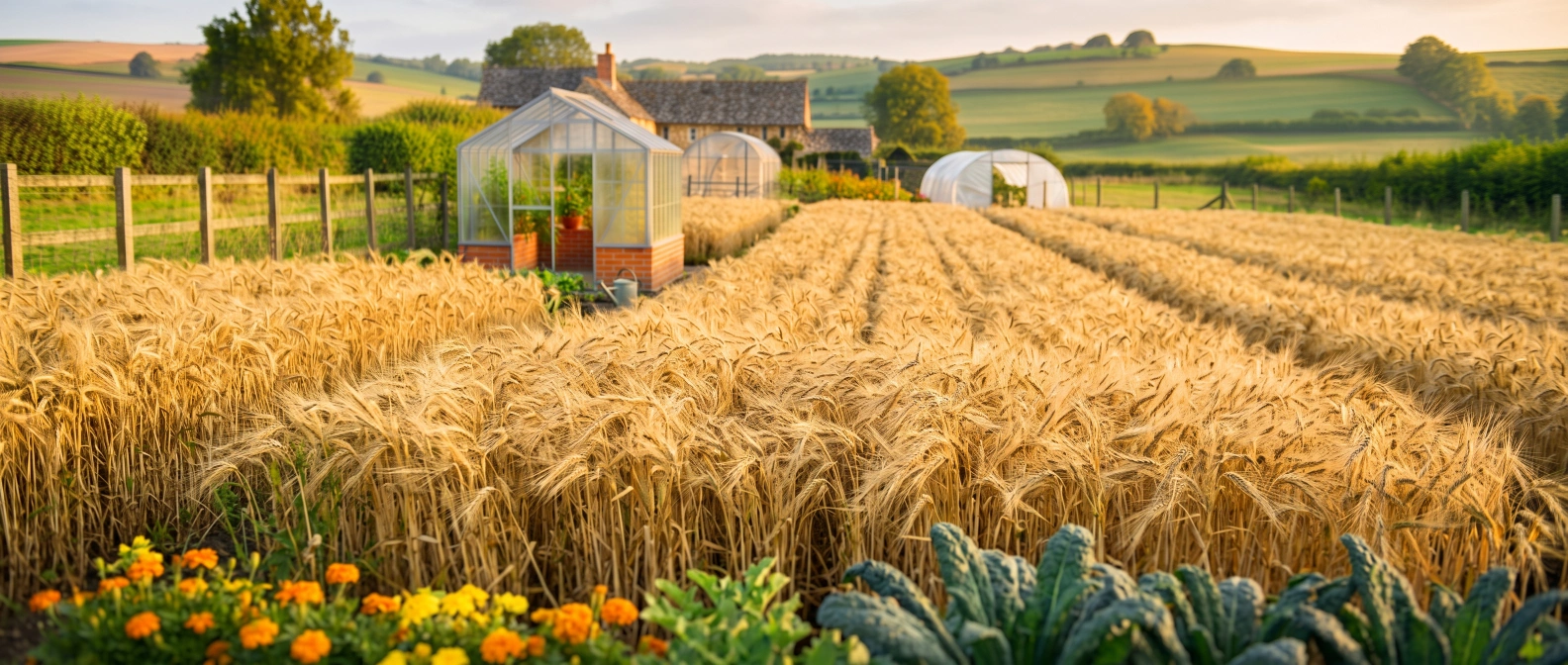
Wheat covers more ground than the name suggests -- bread wheat, spelt, durum, emmer and einkorn are all "wheat" but different species, and like oats and barley, bread wheat is cleistogamous, pollinating itself before the flower even opens. That combination makes it one of the safest and easiest grains for home seed saving.
New to terms like isolation distance or outcrossing? See the Seed-Saving Glossary.
Wheat Types Covered by This Guide
These are the common wheat species grown in home gardens -- all self-pollinate individually, and cross with each other only rarely:
Because each species is highly self-pollinating, even growing several side by side rarely produces meaningful crossing -- unlike most of the crops on this site, isolation between wheat types is a minor precaution rather than a strict requirement.
Seed-Saving Difficulty
How It's Pollinated
Self-pollinating (cleistogamous -- flowers fertilise before opening)
(Very low crossing risk)
Scientific name: Triticum aestivum
Domestic Crops It Can Cross With
- Minimal crossing between bread wheat varieties -- flowers self-pollinate before they open
- Spelt, einkorn, emmer and durum are different wheat species and rarely cross with bread wheat or each other at any meaningful rate
Wild Relatives & Feral Species
- Wild grasses in the wheat family are not close enough relatives to cross in most home garden settings
Separation Distances Required
Minimum: 3-5m between varieties
Recommended: 10m for extra security
Strict: Not usually needed -- cleistogamous flowering makes outcrossing rare
Seed-Saving Strategies
- Allow heads to fully mature and turn golden-brown
- Cut and stook, or thresh directly once fully dry
- Store dry grain somewhere cool -- viable 5-10 years, among the longest-lived seed on this site