
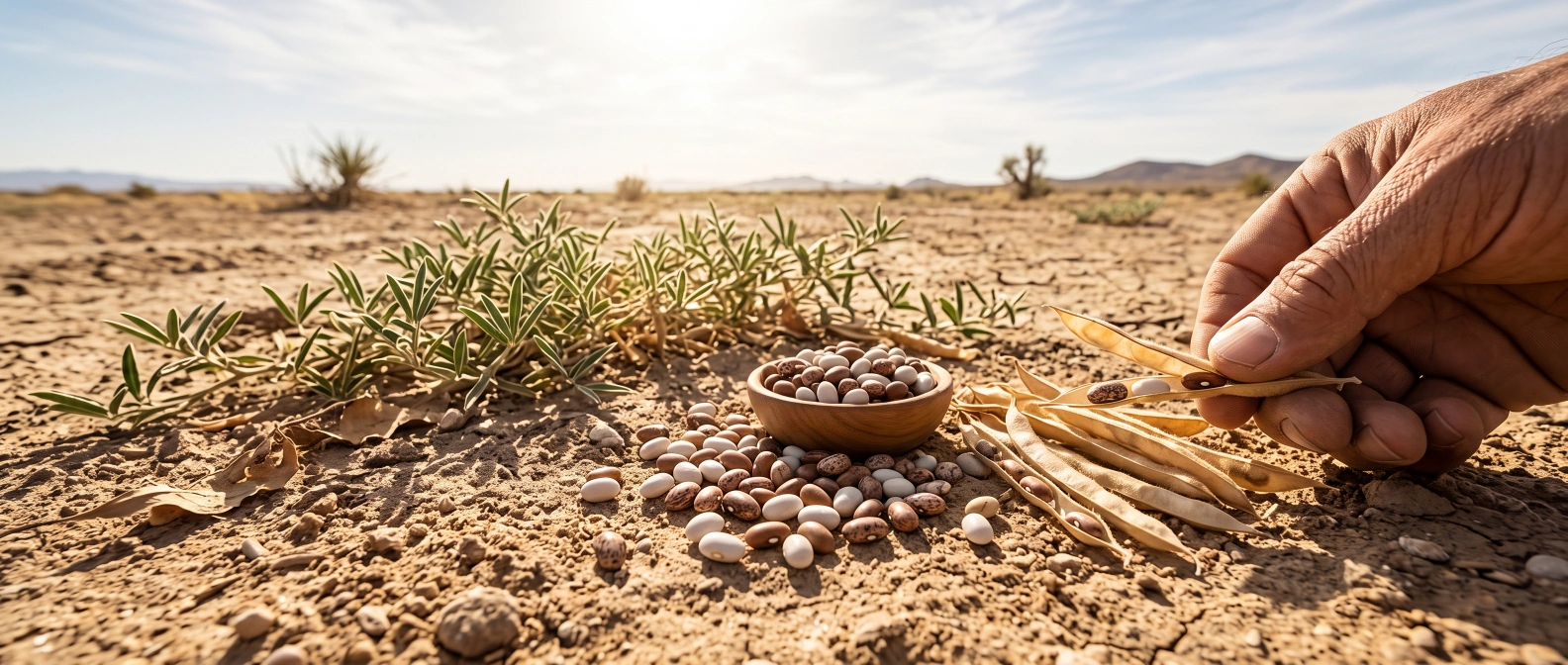
Tepary bean handles drought better than almost any other bean and behaves much like common bean for seed saving -- mostly self-pollinating, low risk, and genetically isolated from common bean despite the family resemblance.
New to terms like isolation distance or outcrossing? See the Seed-Saving Glossary.
Seed-Saving Difficulty
●
Moderate Difficulty
Low to moderate crossing risk.
How It's Pollinated
Mostly self-pollinating, similar to common bean
(Low to moderate crossing risk)
Scientific name: Phaseolus acutifolius
Domestic Crops It Can Cross With
- Other tepary bean varieties flowering at the same time
- Does not cross with common bean (Phaseolus vulgaris) -- different species
Wild Relatives & Feral Species
- Wild Phaseolus acutifolius exists in arid parts of the south-western United States and Mexico but is not a practical concern elsewhere
Separation Distances Required
Minimum: 10-20m between varieties
Recommended: 50m for increased purity
Strict: Bag flower clusters for guaranteed purity
Seed-Saving Strategies
- Extremely drought-tolerant -- allow pods to dry fully even under dry conditions
- Harvest when pods are brown and papery
- Shell and thresh
- Store dry -- viable 4-5 years