
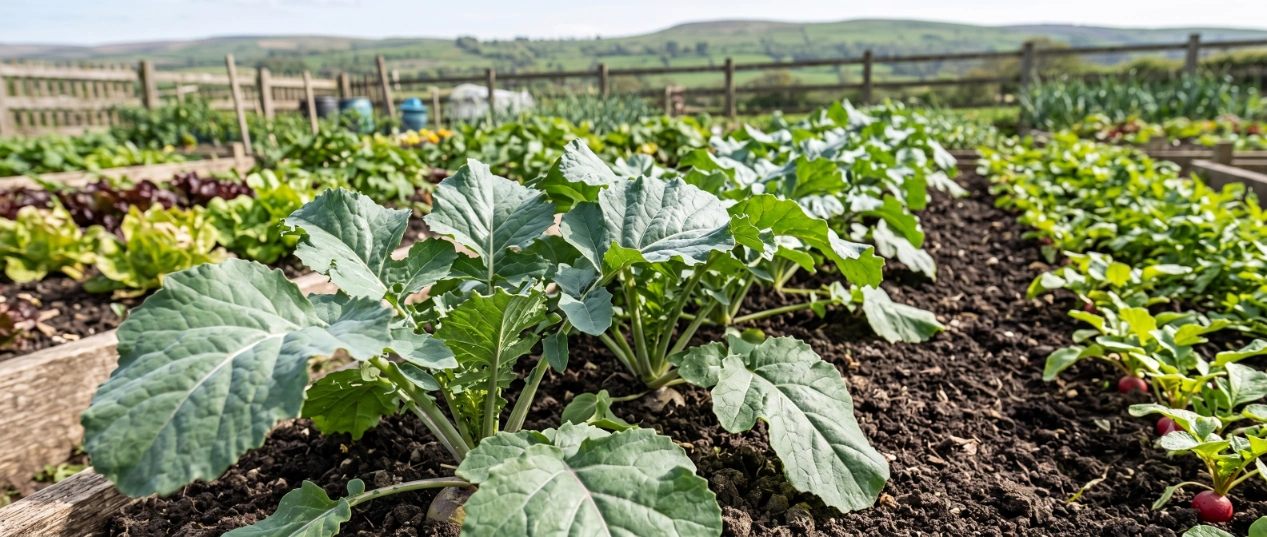
Swede is a different species from the cabbage/kale/broccoli group, so it won't cross with them -- but it shares a species with oilseed rape, which means gardens near farmland face a crossing risk most people don't expect.
New to terms like isolation distance or outcrossing? See the Seed-Saving Glossary.
Seed-Saving Difficulty
●
Difficult
High crossing risk
How It's Pollinated
Insect-pollinated (high outcrossing)
(High crossing risk)
Scientific name: Brassica napus
Domestic Crops It Can Cross With
- Other swede varieties
- Does not cross with cabbage, kale, broccoli or the other Brassica oleracea crops -- swede is a different species (B. napus)
Wild Relatives & Feral Species
- Feral oilseed rape (also B. napus) is widespread in farmed regions and crosses readily -- a significant, often invisible risk near agricultural land
Separation Distances Required
Minimum: 500m between varieties
Recommended: 800m-1km, more near oilseed rape fields
Strict: Bag and hand-pollinate flower heads for guaranteed purity
Seed-Saving Strategies
- Biennial -- overwinter roots (mild zones) or lift and store, replant in spring
- Allow seed pods to dry brown on the plant
- Harvest before pods shatter and thresh
- Store dry -- viable 4-5 years