
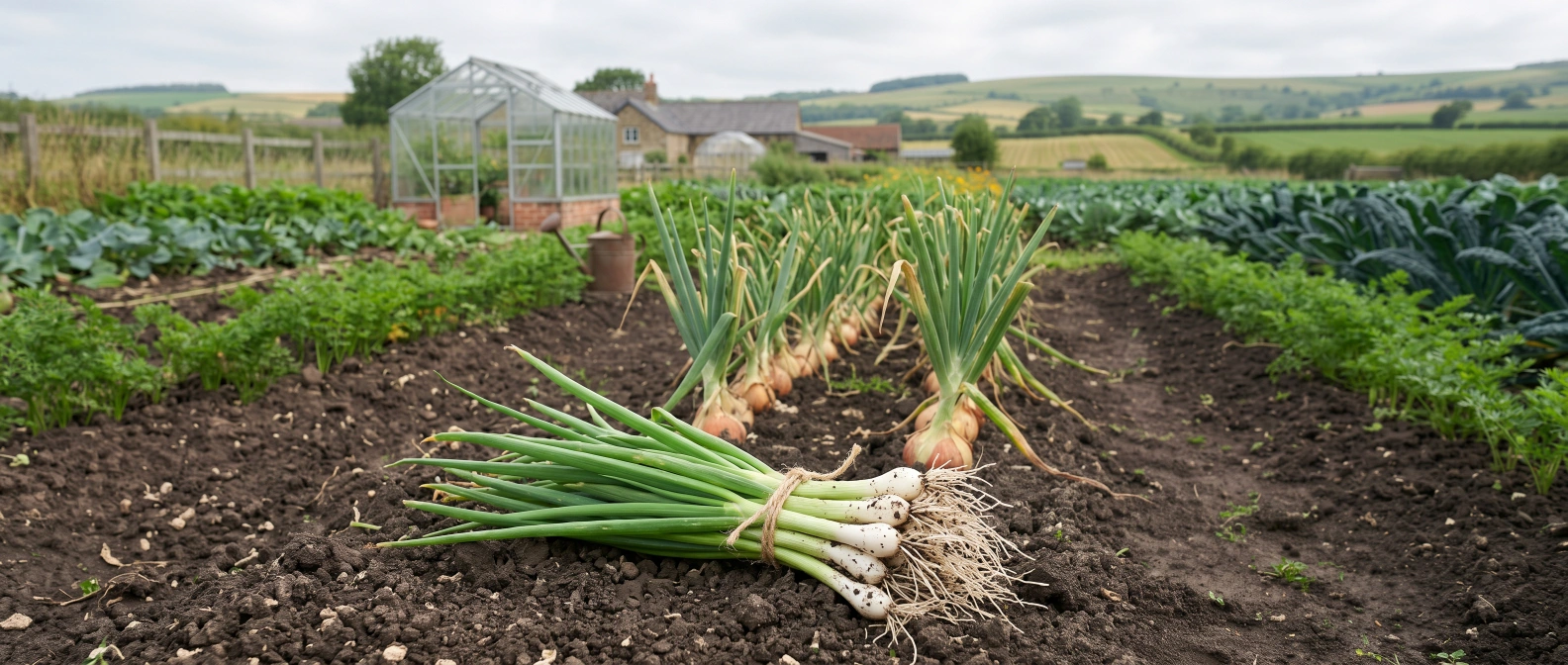
Spring onion is a naming trap as much as a seed-saving challenge -- some varieties are true bunching onions (a separate species from bulb onion), while others are simply bulb onion picked young. Which species yours is decides whether it will cross with your onion or shallot patch.
New to terms like isolation distance or outcrossing? See the Seed-Saving Glossary.
Seed-Saving Difficulty
●
Moderate Difficulty
Moderate crossing risk
How It's Pollinated
Insect-pollinated
(Moderate crossing risk)
Scientific name: Allium fistulosum / Allium cepa
Domestic Crops It Can Cross With
- Other spring onion varieties of the same species
- True bunching onions (A. fistulosum) do not cross with bulb onion or shallot (A. cepa) -- but many "spring onion" varieties are actually young A. cepa, which do cross with onion and shallot. Check your variety's species before assuming either way
- Welsh onion -- also Allium fistulosum, the same species as true bunching-type spring onions, and will cross with them
Wild Relatives & Feral Species
- No significant wild relatives in most home garden regions
Separation Distances Required
Minimum: 200m between varieties
Recommended: 400m for reliable purity
Strict: Bag flower heads for guaranteed purity
Seed-Saving Strategies
- Biennial -- overwinter plants or lift and replant in spring
- Allow flower umbels to dry and seed to turn black
- Cut heads before seed shatters, finish drying indoors
- Store dry -- viable 1-2 years