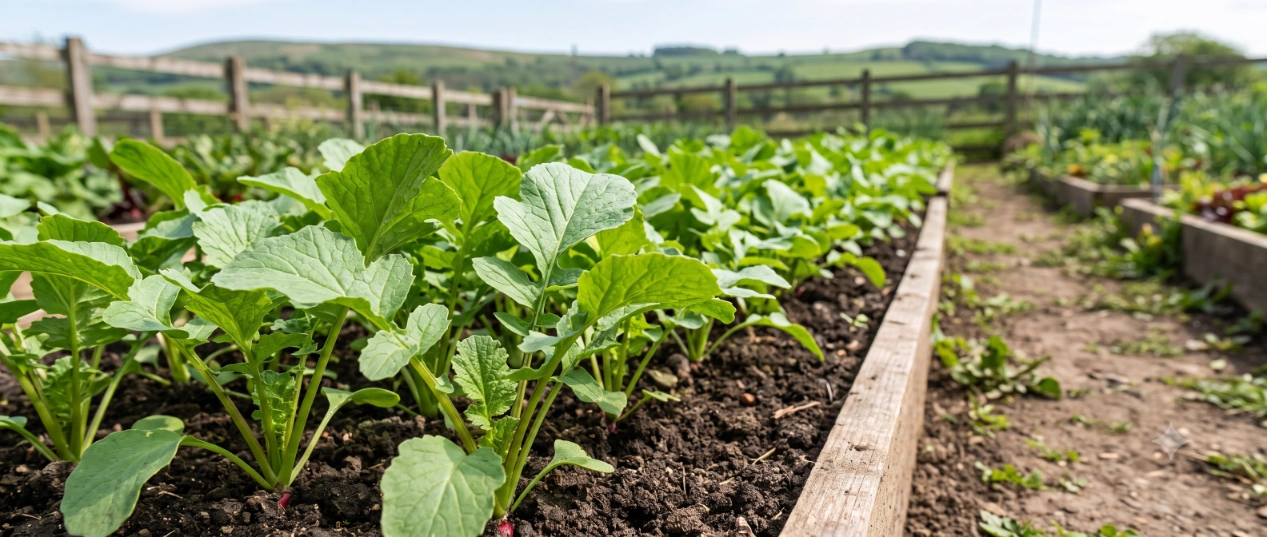
Radish has a wrinkle beyond the usual crossing risk: it's self-incompatible, meaning a single plant can't pollinate itself at all. You need several plants of the same variety flowering together just to get seed -- while also keeping other varieties and wild radish well away.
New to terms like isolation distance or outcrossing? See the Seed-Saving Glossary.
Seed-Saving Difficulty
●
Difficult
High crossing risk
How It's Pollinated
Insect-pollinated -- and self-incompatible (needs pollen from a different plant of the same variety)
(High crossing risk)
Scientific name: Raphanus sativus
Domestic Crops It Can Cross With
- Any other radish variety flowering at the same time
Wild Relatives & Feral Species
- Wild radish (Raphanus raphanistrum) is a common arable weed and crosses readily with cultivated radish -- a significant risk near farmland
Separation Distances Required
Minimum: 500m between varieties
Recommended: 800m-1km, more near wild radish populations
Strict: Bag and hand-pollinate for guaranteed purity
Seed-Saving Strategies
- Radish is self-incompatible -- save seed from at least 6-12 plants, not just one or two, or you may get no seed at all
- Allow seed pods to dry brown and papery on the plant
- Harvest before pods split, then thresh
- Store dry -- viable 4-5 years