
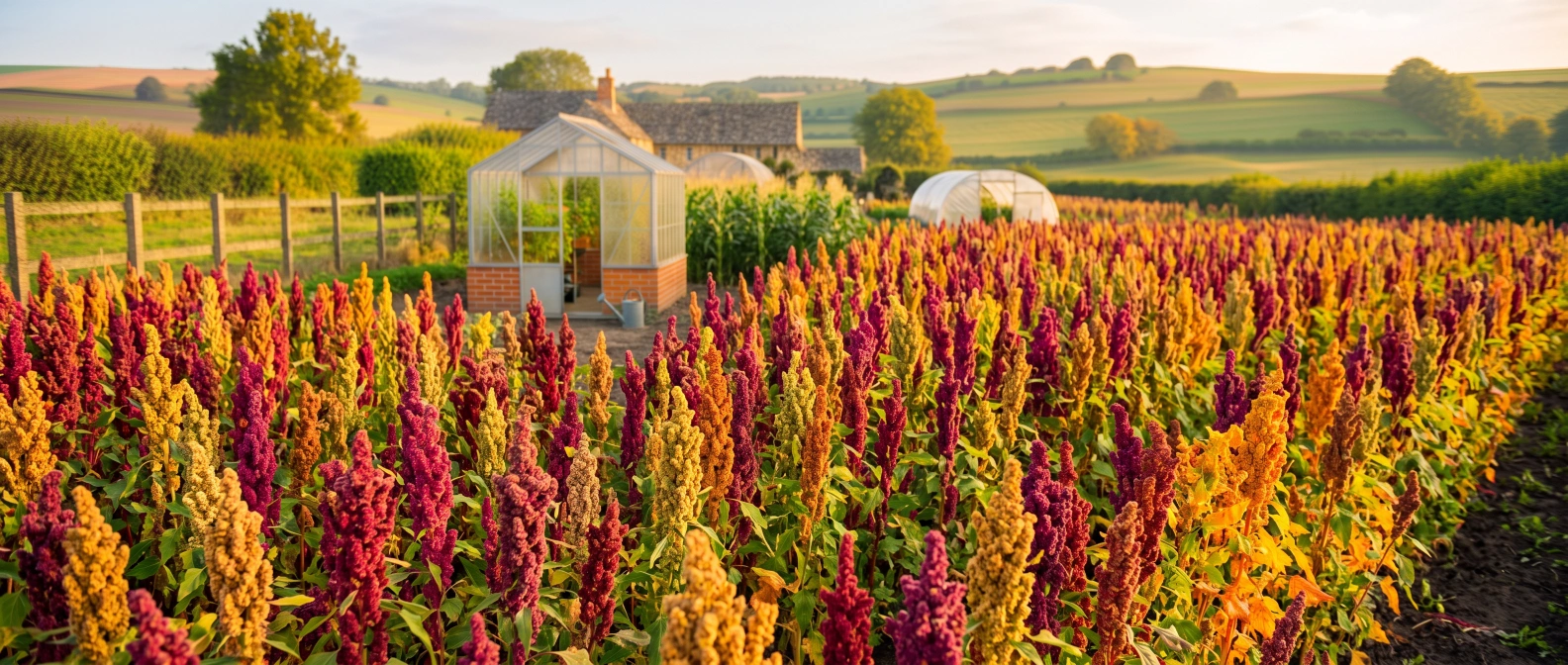
Quinoa flowers are mostly self-pollinating, but not as completely self-contained as wheat or barley -- wind can carry some pollen between plants, so different varieties grown close together will drift over time.
New to terms like isolation distance or outcrossing? See the Seed-Saving Glossary.
Seed-Saving Difficulty
●
Moderate Difficulty
Low to moderate crossing risk
How It's Pollinated
Mostly self-pollinating, with some wind-carried outcrossing
(Low to moderate crossing risk)
Scientific name: Chenopodium quinoa
Domestic Crops It Can Cross With
- Other quinoa varieties flowering at the same time -- some outcrossing occurs even though flowers are mostly self-fertile
Wild Relatives & Feral Species
- Related Chenopodium weeds (fat hen / lambsquarters) are a different species and do not cross, but can be confused with volunteer seedlings
Separation Distances Required
Minimum: 50m between varieties
Recommended: 100-200m for high purity
Strict: Grow one variety per season for guaranteed purity
Seed-Saving Strategies
- Allow seed heads to dry fully on the plant -- seeds rattle when ready
- Rub heads between hands over a bucket to release seed
- Winnow to remove chaff and saponin-coated debris
- Store dry -- viable 4-6 years