
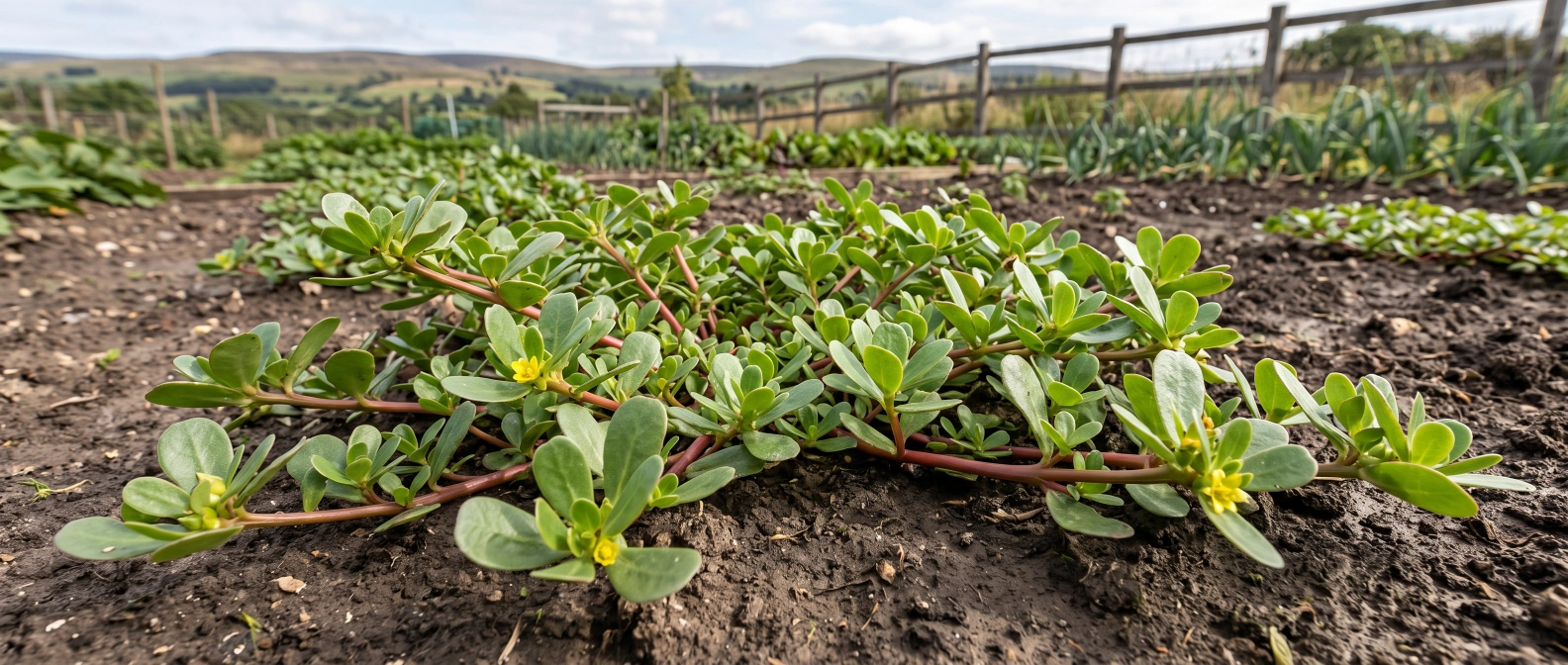
Cultivated purslane and the "weed" purslane that grows uninvited in most vegetable gardens are the exact same species -- so if you're growing a named purslane variety for seed, any nearby weedy purslane left to flower is a genuine, easily missed crossing risk.
New to terms like isolation distance or outcrossing? See the Seed-Saving Glossary.
Seed-Saving Difficulty
✓
Safe to Save
Low crossing risk.
How It's Pollinated
Self-pollinating
(Low crossing risk)
Scientific name: Portulaca oleracea
Domestic Crops It Can Cross With
- Different purslane varieties, if grown -- most gardeners grow a single strain
Wild Relatives & Feral Species
- Wild/weedy purslane is the same species as cultivated purslane and is an extremely common garden weed -- a real and easily overlooked crossing risk
Separation Distances Required
Minimum: 25m as good practice
Recommended: 50m if wild purslane is present nearby
Strict: Pull weedy purslane before it flowers near your crop
Seed-Saving Strategies
- Allow the small seed capsules to dry and pop open on the plant
- Check plants regularly once flowering -- capsules release seed quickly once ripe
- Collect into a container to catch seed as capsules open, or bag a few stems
- Store dry -- purslane seed remains viable for decades, among the longest-lived seed on this site