
Onion is biennial and needs a full second year of growth before it flowers, and because it shares a species with shallot, the two need to be kept apart at flowering time even though they look and cook quite differently.
New to terms like isolation distance or outcrossing? See the Seed-Saving Glossary.
Seed-Saving Difficulty
How It's Pollinated
Insect-pollinated
(Moderate crossing risk)
Scientific name: Allium cepa
Domestic Crops It Can Cross With
- Other onion varieties flowering at the same time
- Shallot -- same species (Allium cepa) and will cross freely. See our Shallot page
- Some spring onion varieties are also true A. cepa and will cross -- check your variety's species
Wild Relatives & Feral Species
- No significant wild relatives in most home garden regions -- onion has no wild ancestor still in cultivation range
Separation Distances Required
Minimum: 200m between varieties
Recommended: 400-500m for reliable purity
Strict: Bag flower heads and hand-pollinate for guaranteed purity
Seed-Saving Strategies
- Biennial -- overwinter bulbs (mild zones) or lift and store, replant in spring
- Allow the round flower umbels to dry and seed to turn black
- Cut heads before seed shatters, finish drying indoors
- Store dry -- onion seed is short-lived, viable only 1-2 years -- sow fresh where possible
Why Onion Seed Doesn't Keep Long
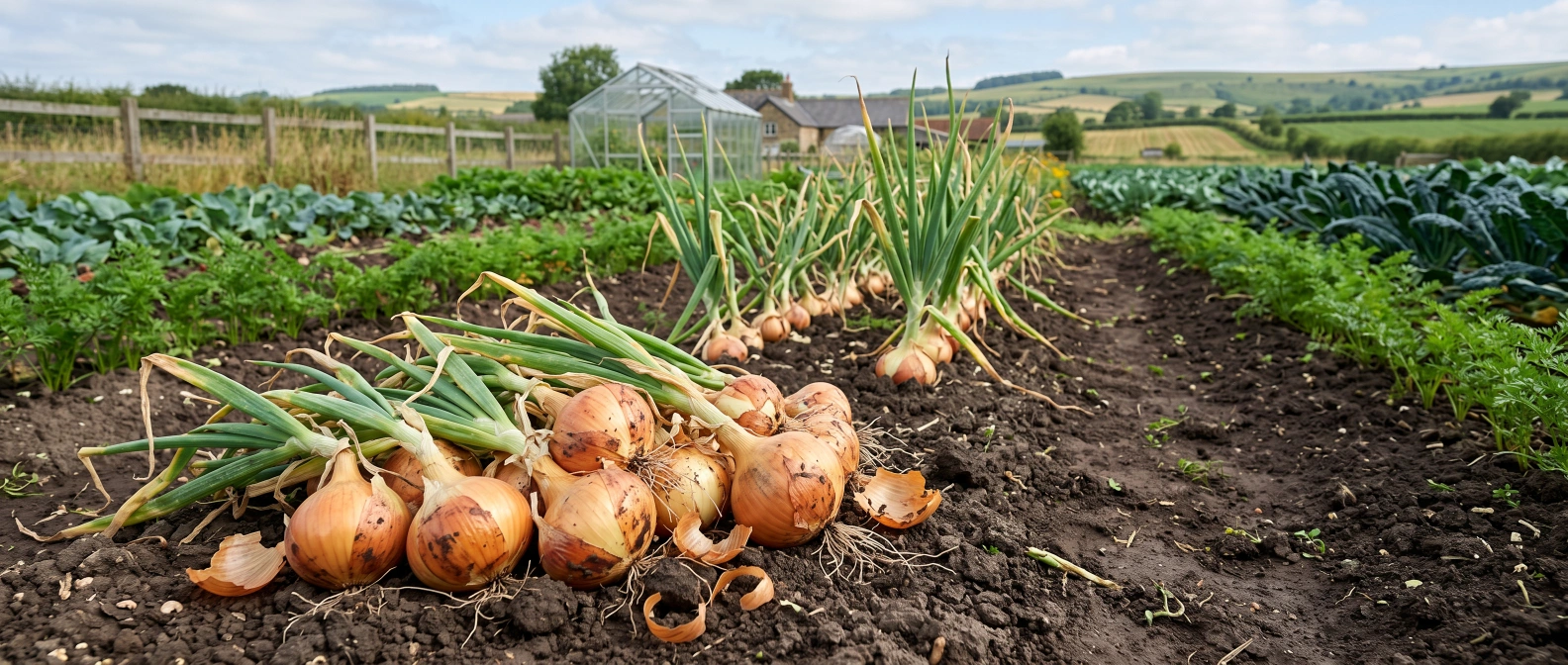
Onion is one of the shorter-lived seeds on this site -- even stored well, viability drops off sharply after year two, which catches out gardeners used to beans or squash seed lasting five years or more. Combine that with the two-year biennial cycle needed just to get seed in the first place, and onion becomes a crop worth growing out for seed regularly rather than banking a big batch and forgetting about it.