
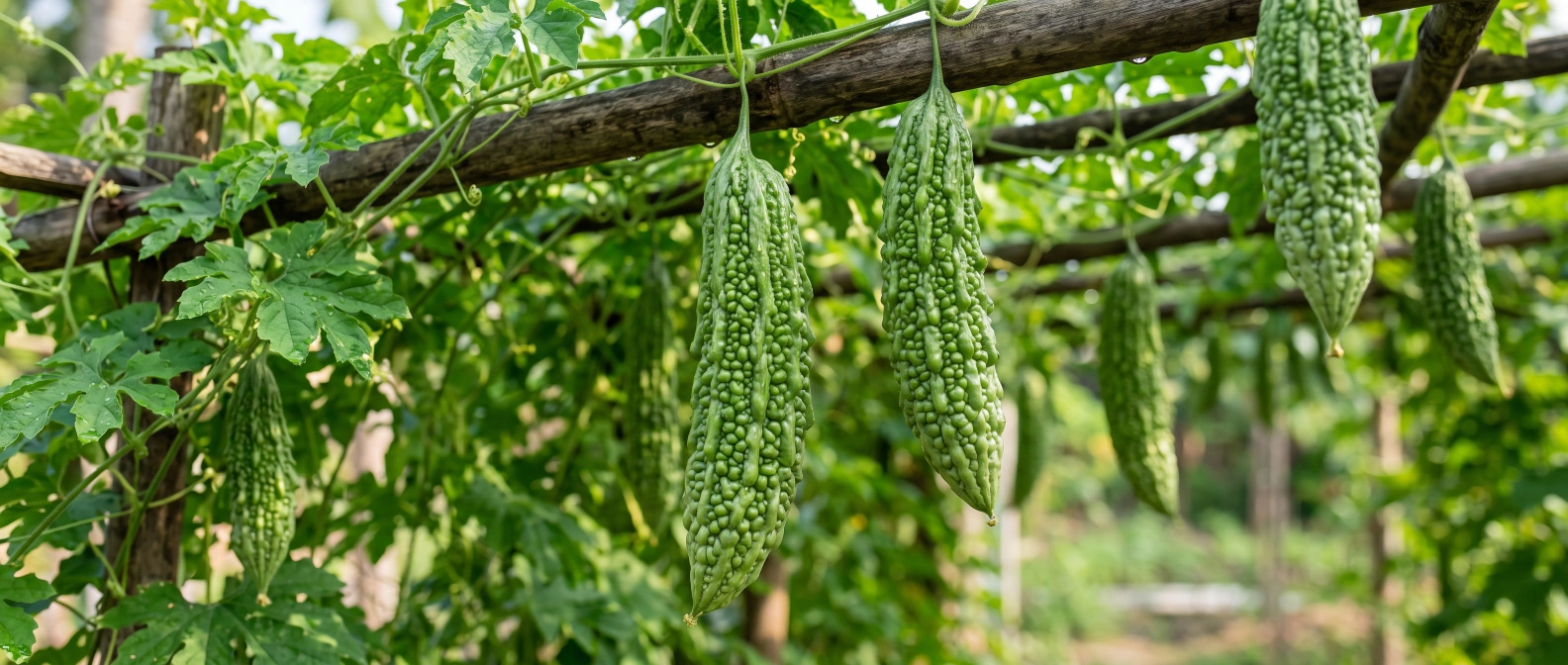
Bitter melon is insect-pollinated with separate male and female flowers on the same vine, and unlike its eating stage, viable seed only appears once the fruit is left to fully ripen and split open -- well past when most people would harvest it for the kitchen.
New to terms like isolation distance or outcrossing? See the Seed-Saving Glossary.
Seed-Saving Difficulty
●
Moderate Difficulty
Moderate to high crossing risk.
How It's Pollinated
Insect-pollinated (monoecious -- separate male/female flowers)
(Moderate to high crossing risk)
Scientific name: Momordica charantia
Domestic Crops It Can Cross With
- Other bitter melon varieties flowering at the same time
Wild Relatives & Feral Species
- Wild Momordica relatives exist in some tropical regions and can cross where present
Separation Distances Required
Minimum: 300m between varieties
Recommended: 500m for reliable purity
Strict: Hand-pollinate for guaranteed purity in small gardens
Seed-Saving Strategies
- Allow fruit to fully ripen on the vine until it turns orange and begins splitting
- Extract seeds from the bright red aril (pulp) surrounding them
- Rinse off the aril and dry seeds fully
- Store dry -- viable 3-4 years