
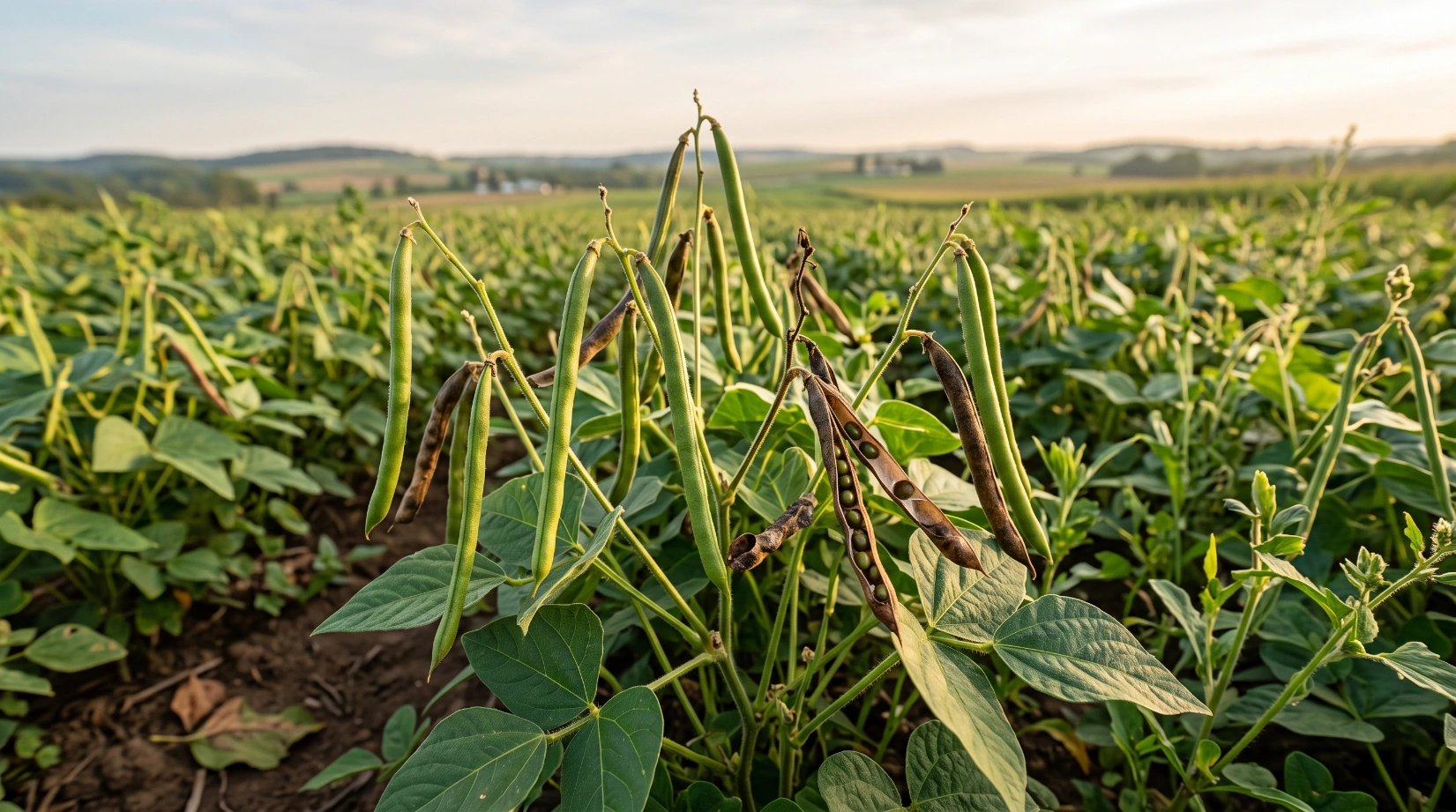
Adzuki bean, mung bean, black gram and moth bean are all small, self-pollinating legumes in the genus Vigna, widely grown across Asia -- and despite the family resemblance, each is a distinct species that won't cross with the others. They're grouped on one page simply because the seed-saving advice for all four is essentially identical: low risk, minimal isolation, straightforward harvest.
New to terms like isolation distance or outcrossing? See the Seed-Saving Glossary.
Crops Covered by This Guide
These are four different Vigna species with an almost identical seed-saving profile -- each crosses only with more of itself, not with the others:
Unlike our Brassica or Cowpea group pages, these four do not cross with each other -- they're grouped here because their seed-saving needs are nearly identical, not because they share a species. Also does not cross with common bean, cowpea, or other legumes on this site.
Seed-Saving Difficulty
How It's Pollinated
Self-pollinating
(Very low crossing risk)
Domestic Crops It Can Cross With
- Only other plants of the same crop -- e.g. one mung bean variety with another mung bean variety
- Does not cross between adzuki, mung, black gram or moth bean -- different species despite the shared genus
Wild Relatives & Feral Species
- Wild relatives of these species exist across parts of Asia but are not a practical concern in most home garden regions
Separation Distances Required
Minimum: 5-10m between varieties of the same crop
Recommended: Not usually needed beyond this
Strict: Not usually needed
Seed-Saving Strategies
- All are fast-maturing, warm-season crops
- Allow pods to dry brown and rattle on the plant
- Harvest before pods shatter, then thresh
- Store dry -- viable 3-4 years