
Humanure, properly composted human waste, is a genuinely serious pathogen-safety topic in any climate, and it deserves more caution here, not less. In a self-sufficiency context where normal sanitation systems may not be available, knowing how to process it safely matters enormously. This chapter covers the same core safety principles used anywhere in the world, with the specific, and genuinely more demanding, considerations that heat, humidity and higher background disease pressure bring to a tropical climate.
The Two-Bin or Bucket System
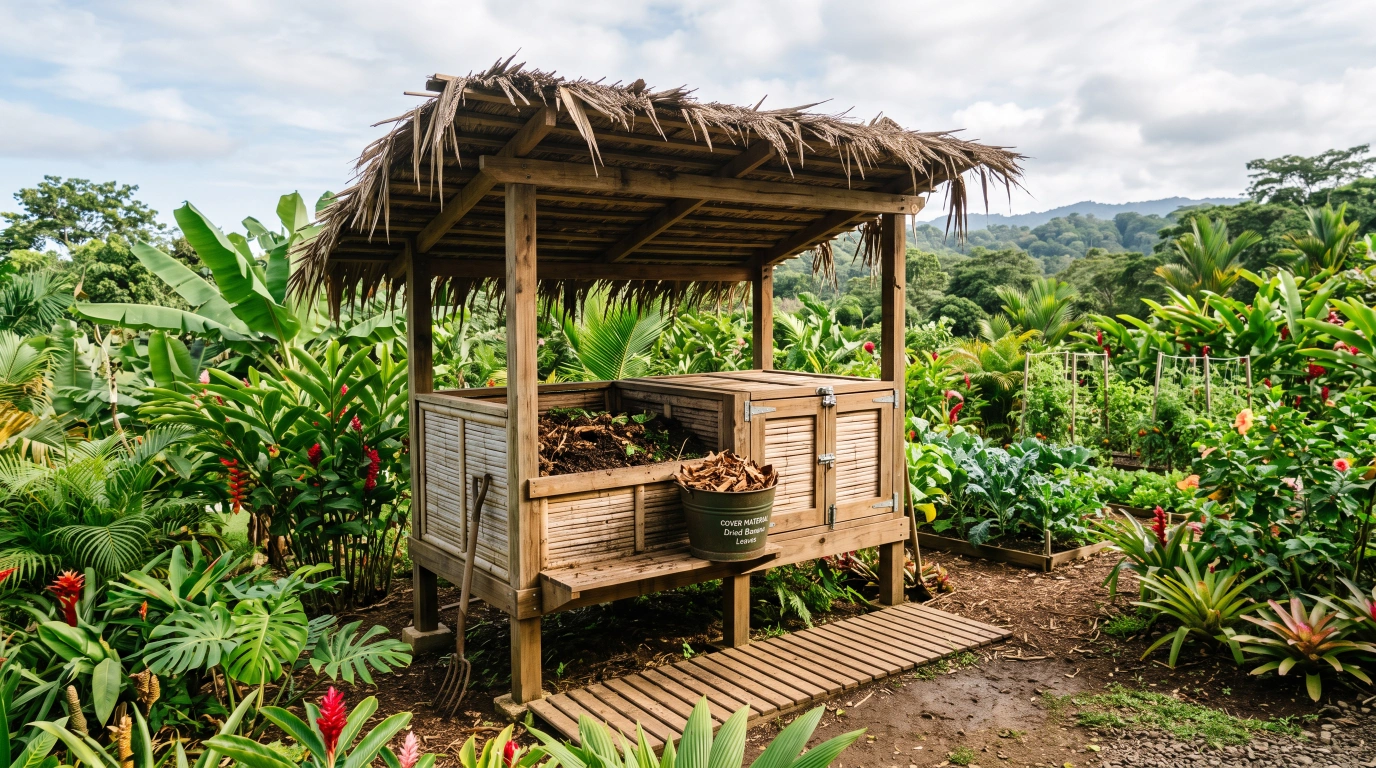
A simple bucket system, or a two-bin arrangement where one bin fills while the other processes, is the standard low-technology approach. Waste is collected in a covered container and, critically, a generous layer of dry cover material is added after every single use. Once a bin or bucket is full, it's set aside to process undisturbed, raised off the ground and roofed against rain exactly as covered in Chapter 3, while a second one fills.
Cover material choices that suit this climate well include dried banana leaves, rice husks, and dry soil or ash, all reasonably available without relying on supply chains. The cover layer does three jobs at once: it controls odour, it absorbs excess moisture, and it adds carbon that balances nitrogen-rich material underneath it, which matters even more here given how genuinely scarce reliable dry carbon is (see Chapter 4).
Heat, Disease Pressure and Processing Time
As covered in Chapter 1, heat speeds pathogen die-off, and a pile that reliably reaches and holds a proper thermophilic temperature of 55-65 degrees C can, in principle, process somewhat faster here than the same pile would in a cooler climate. That much is genuinely true.
But this climate carries two serious complications that make "faster in theory" a genuinely dangerous licence to act on. First, background levels of parasites and disease organisms are higher here than in a cool or dry climate, simply because heat and humidity favour a much wider range of pathogens surviving and spreading in the first place, so there's more to kill and less margin for error. Second, the waterlogging risk covered throughout this guide means a poorly built or poorly drained pile may never reliably reach or hold proper thermophilic temperature at all, a soggy, oxygen-starved pile runs cool and anaerobic rather than hot, and cool means the pathogen die-off this whole approach depends on simply isn't happening.
Because of this, this chapter is deliberately more conservative than the equivalent guidance for a drier climate, not less. A genuinely well-built, well-drained, well-covered pile that reliably heats is a prerequisite before any faster timeline is even worth considering, and that confirmation should come from an actual compost thermometer, not an assumption based on the weather outside.
A minimum processing period of a full year, with confirmed thermophilic heat sustained for an extended period within that year, is the responsible standard to work toward here. Where heat can't be confirmed, or drainage is in any doubt, extend the processing time further rather than shorter. Longer is always the safer choice.
Safe Use Guidance
- Never on or near root vegetables -- direct contact risk is too high regardless of processing time.
- Never on leafy greens eaten raw -- splash contamination and surface contact make this a genuine risk.
- Fine for fruit trees and ornamentals -- where there's no direct contact with edible plant surfaces.
- Fine for soil-building beds a season later -- fully cycled-through compost dug into a bed that then grows a further season of other crops before anything is eaten from it.
- Never used fresh, under any circumstance -- the entire point of the processing period is to make this safe, skipping it removes that safety entirely.
Frequently Asked Questions
Doesn't tropical heat make humanure composting faster and safer?
Heat does speed pathogen die-off in principle, but this climate also carries genuinely higher background levels of parasites and disease organisms than a cool or dry climate, and a poorly protected pile may never reliably reach or hold proper thermophilic temperatures at all if it becomes waterlogged. Faster in theory is not licence to shorten processing time here, if anything this climate calls for more caution than a dry one, not less.
What cover material should I use after each use?
Dried banana leaves, rice husks, and dry soil or ash are all reasonably available in this climate. A generous layer added after every use controls odour, absorbs moisture, and keeps flies and other pests away, and it adds the carbon that this climate otherwise struggles to find enough of.
Is finished humanure compost safe to use on vegetables?
Never on or near root vegetables or leafy greens eaten raw, regardless of how long it has processed. Fully cycled-through humanure compost, held for a genuinely conservative period with confirmed sustained heat, is appropriate for fruit trees, ornamentals, or soil-building beds that will grow a further season of other crops before anything from them is eaten.