
Humanure, properly composted human waste, is a genuinely serious pathogen-safety topic in any climate. In a self-sufficiency context where normal sanitation systems may not be available, knowing how to process it safely is essential, and nowhere in this eight-zone series does that deserve more caution than here. The core method is the same everywhere: what changes at real altitude is how honestly hard it is for a pile to ever hold sustained warmth, and that changes everything about how long it genuinely takes.
The Two-Bin or Bucket System
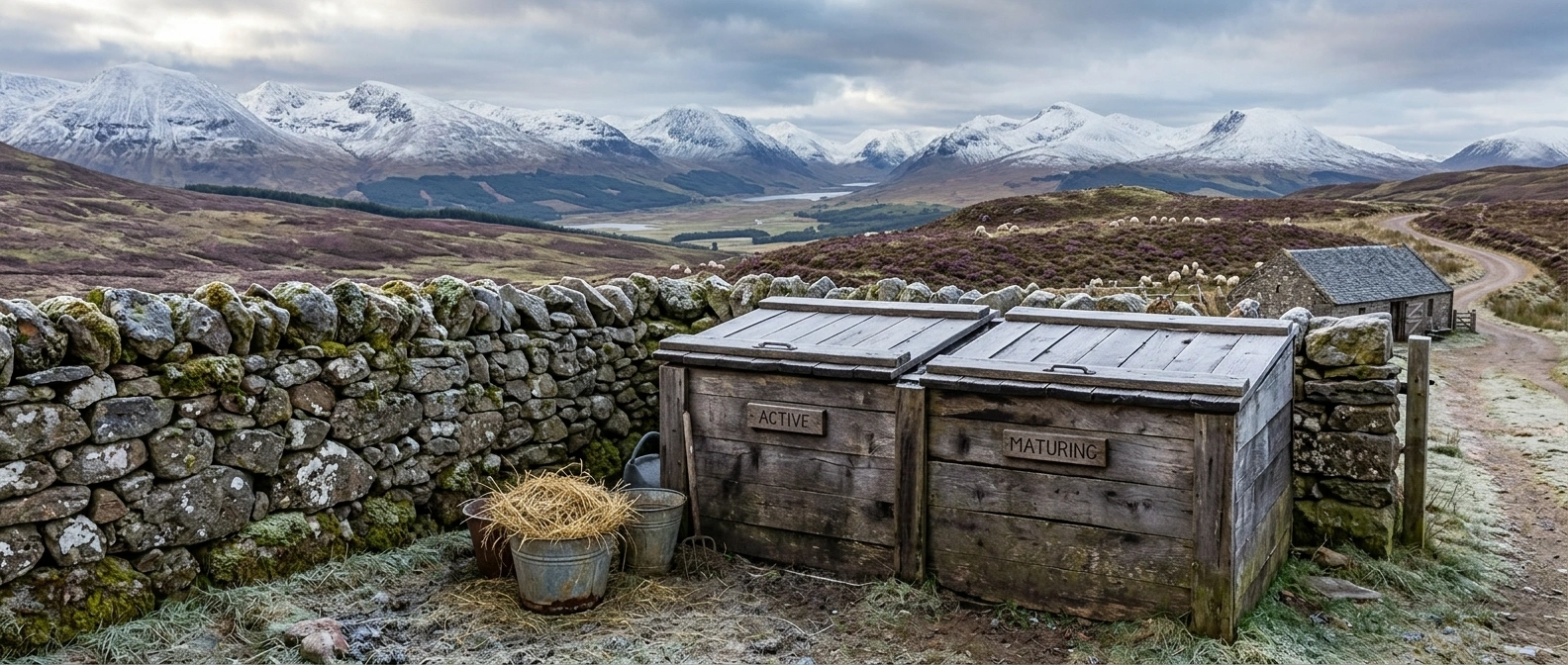
A simple bucket system, or a two-bin arrangement where one bin fills while the other processes undisturbed, is the standard low-technology approach here as anywhere. Waste is collected in a covered container, and a generous layer of dry cover material is added after every single use without exception. Once a bin or bucket is full, it's set aside to process while a second one fills, giving the first bin its entire processing period, however long that genuinely needs to be, before it's ever touched again.
Cover material that suits this climate well includes dried alpine meadow hay, straw, or dry soil, all reasonably available here (see Chapter 6). The cover layer does three jobs at once: it controls odour, absorbs excess moisture, and adds carbon that balances the nitrogen-rich material underneath it.
Daily Freeze-Thaw Works Against a Pile Ever Holding Heat
This is the single most important thing to understand about humanure in this climate, and it needs to be stated plainly and taken seriously. Pathogen die-off depends on a pile reaching and holding thermophilic temperature, roughly 55-65°C, for a sustained period. A cold-winter climate at least offers a genuine, if short, warm season either side of its freeze, a real stretch where a pile can work steadily once it's active. This zone doesn't reliably get that. The daily freeze-thaw cycle described in full in Chapter 11 means a pile can freeze solid overnight and only partially warm through a few hours of midday sun before freezing again, repeated day after day, even during the "active" part of the year.
That constant interruption is genuinely different from, and arguably worse than, a single long seasonal freeze. It means a pile here may never sustain thermophilic heat for as long a stretch as a pile in a climate with a real, if short, continuous warm season, and calendar time spent "active" can be misleading if much of it was actually a repeating cycle of brief warming followed by a hard overnight reset.
Because of this, this zone should be treated as needing one of the longest, most conservative processing minimums anywhere in this series, arguably exceeding even a cool or boreal climate's guidance. Track genuinely sustained active periods, stretches where the pile has held real warmth through a run of days and nights, not just calendar months elapsed and not occasional warm days that got interrupted by the next hard frost. When a sustained stretch is broken by a freeze, treat that as a genuine slowdown in progress, not simply a pause that resumes exactly where it left off. When in doubt, wait considerably longer.
Safe Use Guidance
- Never on or near root vegetables -- direct contact risk is too high regardless of processing time.
- Never on leafy greens eaten raw -- splash contamination and surface contact make this a genuine risk.
- Fine for fruit trees and ornamentals -- where there's no direct contact with edible plant surfaces.
- Fine for soil-building beds well after the conservative minimum -- fully cycled-through compost dug into a bed that then grows a further season of other crops before anything is eaten from it.
- Never used fresh, under any circumstance -- and never on the strength of calendar time alone here, count genuinely sustained active periods, not months merely elapsed.
Frequently Asked Questions
Why is this zone's humanure guidance even more conservative than a cold-winter climate's?
Because a cold-winter climate at least has a genuine, if short, sustained warm season where a pile can work steadily once it thaws. Here, the daily freeze-thaw cycle covered in Chapter 11 means a pile can face a hard overnight frost and then only a few hours of real warmth before freezing again, day after day, even during what counts as the active season. That constant interruption actively works against a pile ever reaching and holding proper thermophilic temperature, which is why this zone needs an explicitly longer, more conservative minimum than even a boreal climate's.
How do I know if a pile's processing time actually counts toward safety here?
Don't count calendar time, and don't count occasional warm days either. What counts is genuinely sustained active periods, stretches where the pile has held real warmth through a run of days and nights, not just spiked briefly at midday before freezing again overnight. A pile that warms during the day and refreezes solid every single night hasn't banked a day of real progress, it's barely holding ground. Track sustained active stretches deliberately, and when a stretch is broken by a hard freeze, treat the count as having genuinely slowed, not simply paused and resumed where it left off.
Is finished humanure compost ever safe to use on food crops here?
Never on or near root vegetables or leafy greens eaten raw, regardless of how long it has processed. Fully cycled-through humanure compost, held for this zone's deliberately long, conservative minimum of genuinely sustained active time, is appropriate for fruit trees, ornamentals, or soil-building beds that will grow a further season of other crops before anything from them is eaten.